


Contributor Leaderboard
-
.jpg.cdd7f8371d17e2f2f2e2a0e21e02f727.jpg) 2Points3,654Posts
2Points3,654Posts
.thumb.jpg.7493ddab4a696108cf2b849323d3c155.jpg)
Popular Content
Showing content with the highest reputation on 02/04/21 in all areas
-
Confused, Vic? What I'm trying to say is that "sack" has never meant wine. In more modern day parlance, wine is a noun and sack is the adjective that describes the wine as being dry. The modern day name would therefore be HONEY DRY FARM. This just doesn't sound right for a farm name. Mind you, neither does Honey Sack Farm. I'm hoping John can let us see the original of those three handwritten words.1 point
-
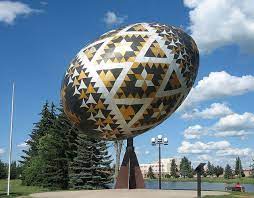
Here it is - the Easter special with lots of easter related questions, a few extra and a special bonus question. Happy Easter to everyone: 1. What is pysanka? 2. What do Australians use to symbolize Easter instead of a rabbit? 3. According to tradition, Hot Cross Buns are made without which ingredient? 4. Who was the jeweler famous for making ornate Easter eggs for the Russian royal family? 5. From what does Easter get its name? 6. What is the Easter egg supposed to symbolize? 7. In 1592 a British monarch banned the sale of hot Cross buns on any day except Easter, Christmas and on one other occasion. Which occasion? 8. From which country did the concept of the Easter bunny originate? 9. Which American President rolled the first, annual White House Easter egg? 10. What was the main objective of the Easter Act of 1928 which never came into force? 11. Is the Easter Bunny ever mentioned in the Bible? 12. The period of fasting before Easter is called Lent. What is the duration of Lent? 13. What is the weight of the largest (real) egg on record? 14. What is the more popular/common name for Shrove Tuesday? 15. Easter Island belongs to which country? 16. Easter fell on which date 2017? 17. What do we call the day which falls 3 days before Easter? 18. Which country introduced the tradition of Hot Cross buns at Easter? 19. What is the first day of Lent, Ash Wednesday or Shrove Tuesday? 20. Pascua is the name for Easter in which language? 21. BONUS question: What do you get if you pour boiling water down a rabbit hole? I’ll bet you didn’t know …. The world’s largest Easter egg weighs in at 5,000 lbs. it stands 31 ft tall and 18 ft wide and can be found near our good friend, Vic, in Alberta, Canada. It took 12,000 hours to make and is actually a jig-saw rather than a sculpture, as it’s made from 3,500 pieces of aluminium.
 1 point
 -
0 pointsSounds lovely! ... and that’s an interesting theory, James. Wouldn’t it be wonderful if we’ve had such an establishment in Bedlington! Unfortunately, I think there are a few holes in the theory. The Old English (OE) period in the development of the English language was 700 – 1100 AD. That’s more or less the period from the arrival to Britain of the Vikings through to the arrival of William the Conqueror and long before 1739. According to the Oxford Dictionary of English Etymology (ODEE) there was already during that time a word for wine in the English language – win (pronounced ‘ween’). This was the same word in Old Norse and in Old High German and it seems to have been part of the normal development of the word winam in the Germanic languages – from which English is descended. At that time, English also had a word for Mead – meodu - and even this seems to have arisen as part of the natural progression of the Germanic word meduz through the same group of languages as seen in: Old High German - metu or mitu and Dutch – mede. (Point of interest: It’s from the same source that we get the word methylated). This begs the question, why did English introduce sack as another word for wine? According to the same source, ODEE, the first recorded use of the word sack, when related to alcoholic beverages, is found in writings from the sixteenth century. (In its relation to the coarse textile (sackcloth) or the bags made from it, it appears a couple of hundred years earlier). However, in relation to alcohol, the meaning of sack was very specific. It didn't relate to just any fortified wine but related generally to a specific "class of white wines from Spain and the Canaries” and the original spelling would have been “ (wyne) seck” meaning dry (wine). ODEE goes on to say that [seck] may originally have been “applied to wines of the sherry class, but later applied to others”. The Sherry connection would cover your theory on fortified wines; however, it seems that sack referred not to the wine itself but rather to one particular quality of wine – dryness. You might recognize it today as sec on French wines or seco on Spanish wines. The alteration from OE seck to modern English sack is not explained but there are, throughout the history of the development of our language, many instances of changing vowel sounds in speech which lead to changes in spelling. Too many to go into here.0 points