


Contributor Leaderboard
-
.jpg.cdd7f8371d17e2f2f2e2a0e21e02f727.jpg) 1Points3,654Posts
1Points3,654Posts
.thumb.jpg.7493ddab4a696108cf2b849323d3c155.jpg)
Popular Content
Showing content with the highest reputation on 11/02/26 in all areas
-
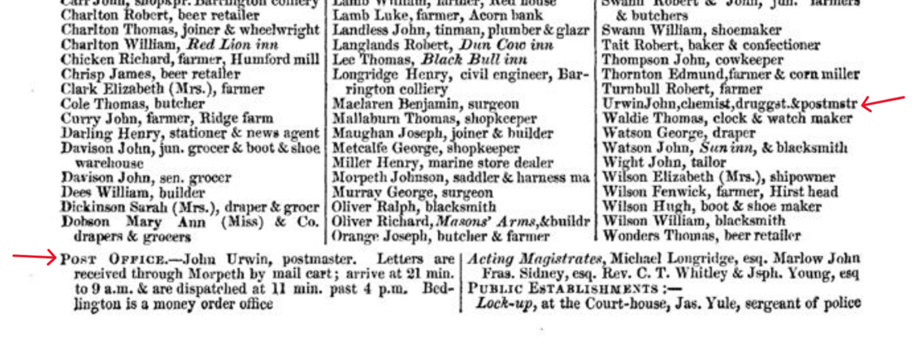
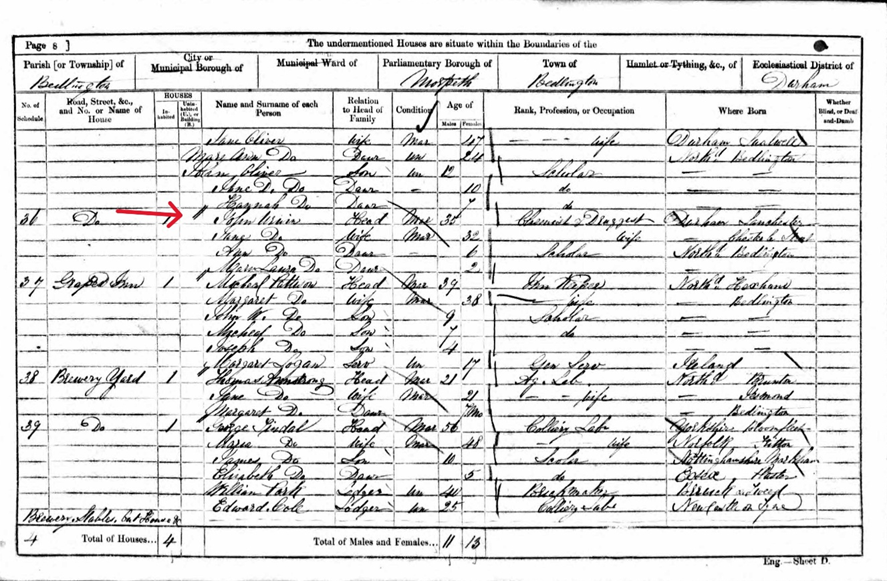
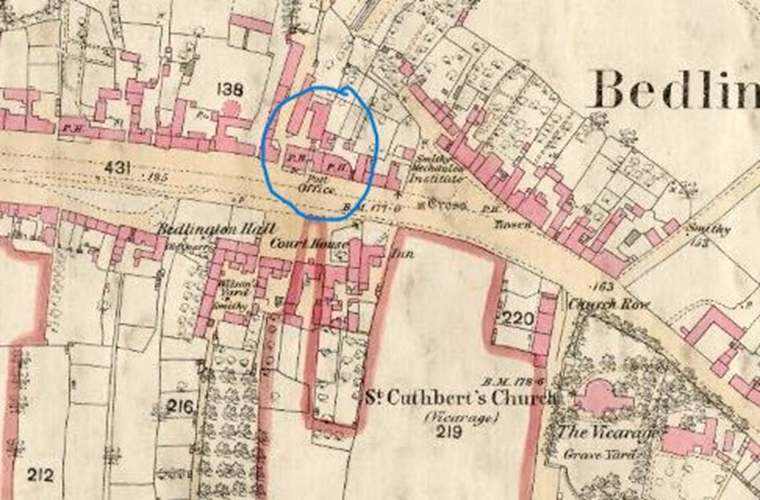
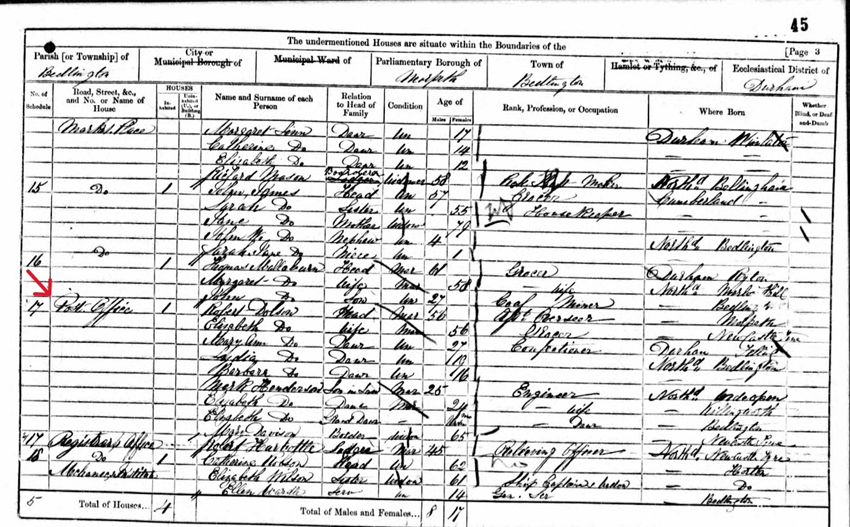
The many comprehensive trade and residential directories are a great source of information covering such things as businesses, notable residents, tradespeople and local institutions - of which the Post Office is but one - so I spent yesterday (and a fair bit of today) rummaging through those I have access to and I thought a fair place to start would be the 1858 Post Office Directory of Northumberland (later called Kelly’s Directory). Part of the entry for Bedlington, p. 26, looks like this: Bottom left I can see that Bedlington did indeed have a “Post Office”. The Postmaster was John Urwin and letters were received by him, from Morpeth, by mail cart. Middle right we can see that John Urwin was a man of many talents when, under the businesses section, he appears as chemist, druggist and postmaster. I thought that was odd but further rummaging through the GPO and Post Office Museum sites shows that it was more than common to combine the role of ‘Postmaster’ with another profession. It seems that by the 1850s the postal system was so well developed that “no village, however insignificant” was “without its receiving-house”. By 1855 there was a network of almost 10, 500 post offices across the country “(made up of 920 Head Post Offices and 9,578 Sub-Post Offices and Receiving Offices)”. There were, in other words, several types of ‘Post Office’, whereof the receiving house had least responsibility. For them, it sufficed to receive letters from the Head Post Office and display them in a window so that anyone passing could see if they had mail to collect. The Postal Museum (online) describes the role of the Postmaster as “a salaried male official in charge of PO operations and staff within a specific area defined by its Post Town”. The term Postmaster, they add “was often used colloquially to refer to a Sub-Postmaster. Most Sub Postmasters and Sub Postmistresses were not employed by the Post Office. They had a main business, like a shop, which offered Post Office services”. Those who took on this role were often considered central, trusted figures in their community. That explains a lot! To me it seems that John Urwin was a sub-postmaster and, looking quickly through several other small towns in the directories, the terms ‘Postmaster’ and ‘Post Office’ are used fleetingly for what appear to be Sub-Postmasters and Sub-Post Offices – having mail delivered to them once a day from a Head Post Office by whatever means available. In 1830 mail was distributed by train for the first time and when Morpeth got its station, in 1847 (on the London to Edinburgh line), it appears to have become the location of the Head Post Office for quite a large area, including Bedlington, to which it distributed mail for further distribution or, more commonly, for collection. Next, I looked at the nearest census returns (1861) to see where John Urwin lived: There he is, schedule nr 36, right next door to the Grapes Inn. His neighbour on the other side, at schedule nr 35, is the Masons Arms: That all fits in nicely with what we can see on the 1860 OS map below. I can also mention here that the Post Office can be seen to have opened in the Market Place (Sch.nr 17). It is occupied by Robert Dobson who gives his occupation as “Ass’t. Overseer” rather than any sort of Post Office worker. Perhaps this dwelling is above the Post Office. I'll take a break here as one of the grandchildren has just arrived. I'll try to post the rest later.

 1 point