

Everything posted by Alan Edgar (Eggy1948)
-
Now if I had been that member of the public that saw the police officers vehicles outside The Chef House Kitchen Cafe I would not have investigated the sighting but would have simply thought they were doing their job. I might have been tempted to report the cafe owner, as the cafe should not have been open on the 9th Jan during a Lockdown, but I wouldn't have reported the police officers.
-
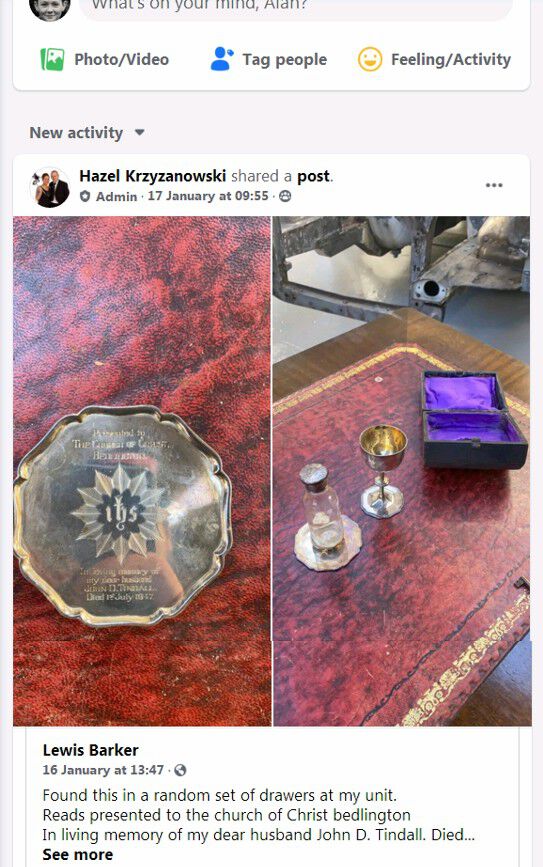
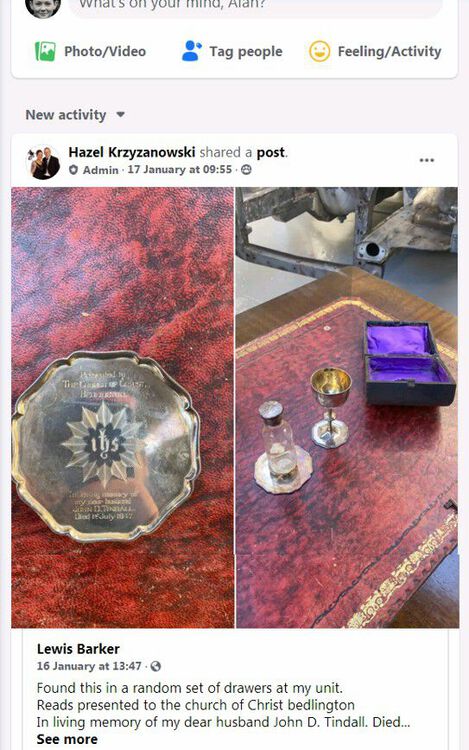
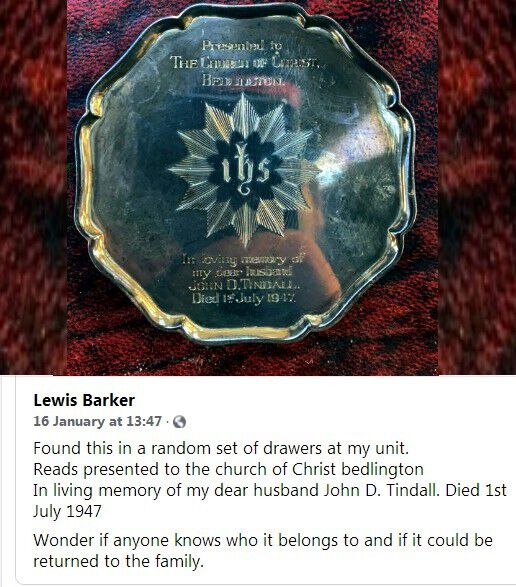
Unfortunately not as it wasn't Lewis Barker that posted the photo + comment on the Bygone Bedlington group. But I can, and will, ask Hazel Krzyzanowski that 'Shared' Lewis's posting (from somewhere on Facebook) if she is in contact with Lewis and if she will ask her . Let you know if Hazel replies. This is the full posting :-
-
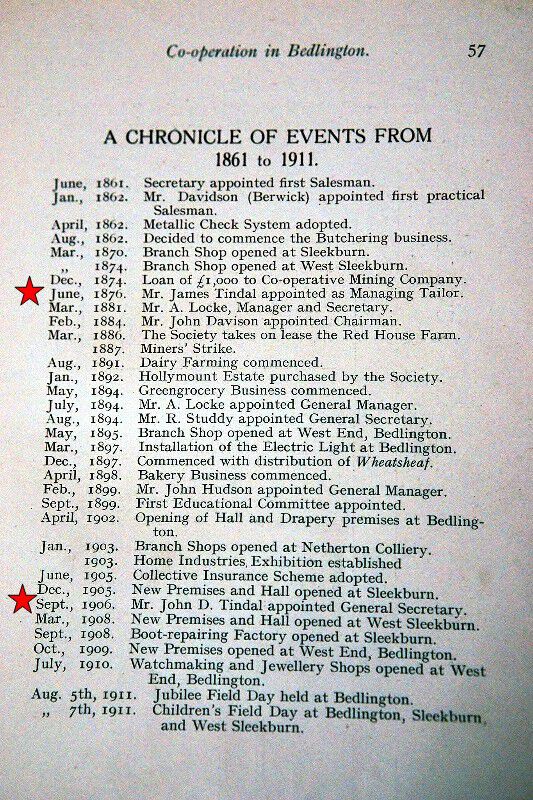
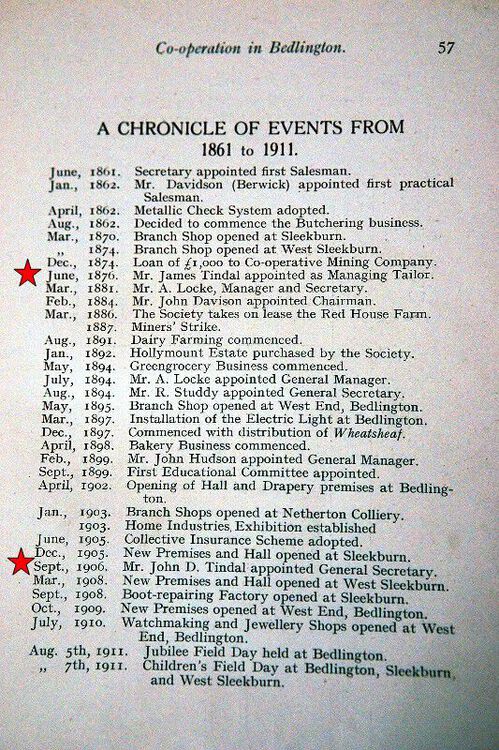
I must have missed Maggie's topic . Another member @graeme had posted pages from that book and I created an album in the gallery :- Page 47 of the book has the list of officers of the society and the Tindal Talor, as well as the secretary, gets a mention.
-
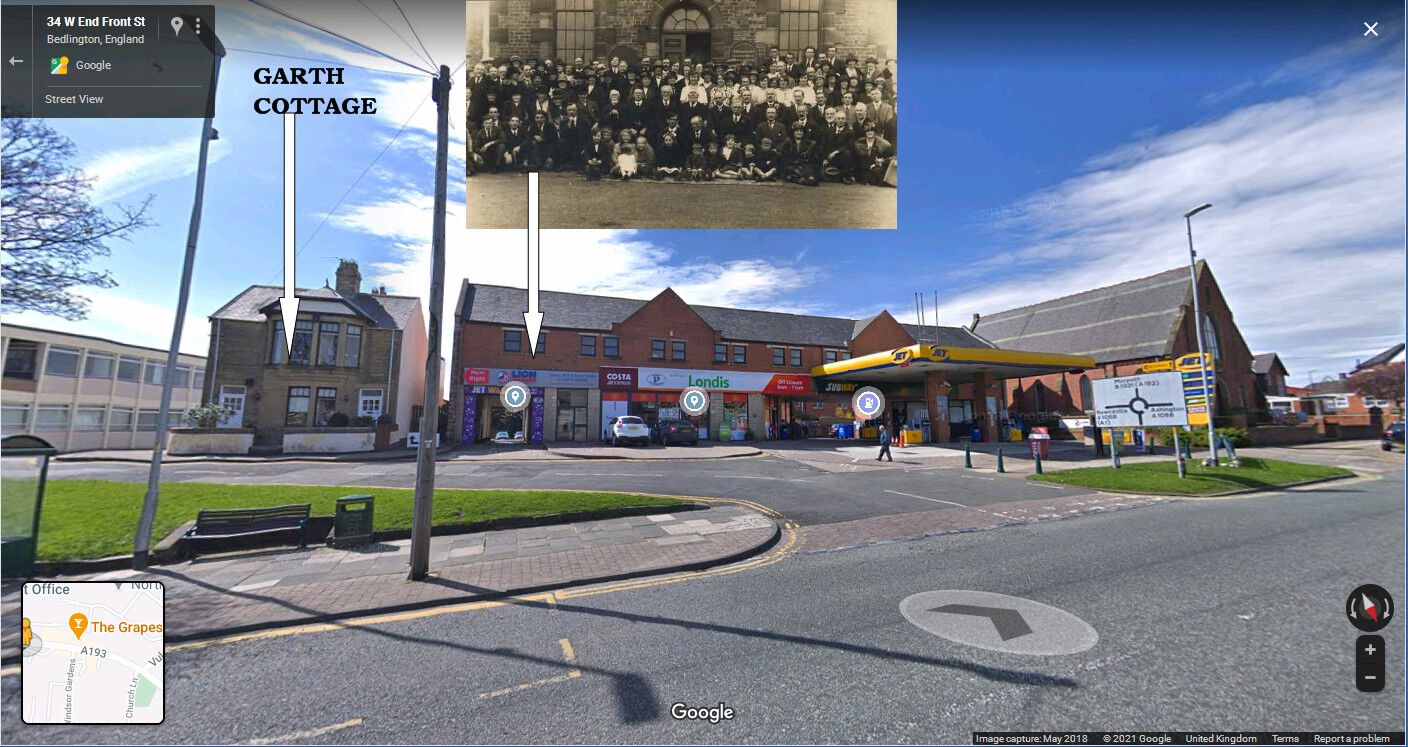
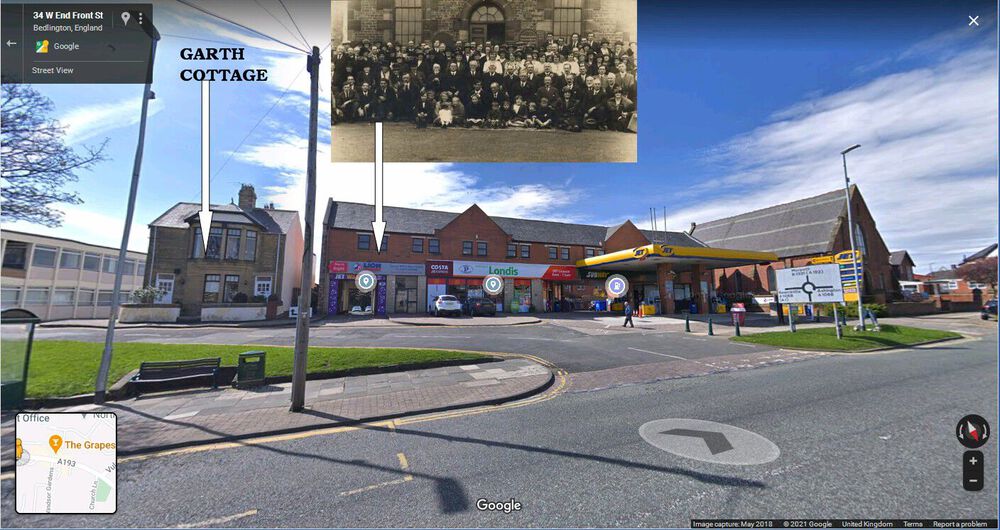
CL - Church of Christ = Front Street West and the Lion Garage extended it's buildings replacing the church. Garth Cottage was next to the church and the church caretaker's family, Marley, lived in Garth Cottage. Mr Marley worked at the Dr Pit and he and his wife were church caretakers. I know that info as back in the 1950's I used to attended the Church of Christ Sunday School held in the single story building behind the church. The caretakers grand daughter also went to the Sunday School (as did @Ovalteeny) and I courted that young lady in the late 1960's and visited Garth Cottage many times.
-
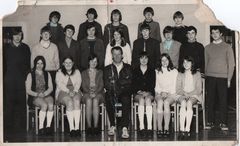 @claire Holmes - I will check on the Cambois Facebook group where the school photo, with Peter Calumboski, was first posted, to see if there are any other photos that have Calumboski family members on. No doubt @HIGH PIT WILMA will have a search through his memory to see if he has any info on your family.
 -
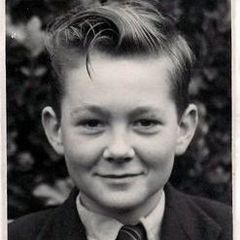
This image posted on the Bygone Bedlington site. Does anyone on this group know the Tindall family?
-
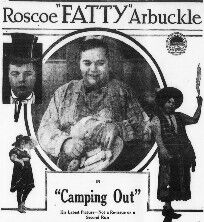
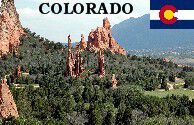
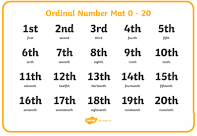
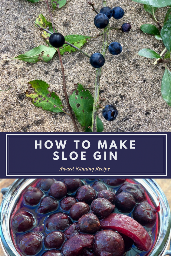
1. In which year was the wearing of front seat belts made compulsory in England? Answer = 1983 2. Pertussis is the medical name for which infectious disease? Answer = Whooping Cough 3. Which Spanish singer was a goalkeeper with Real Madrid before a car crash ended his career? Answer = 4. Which bird was once known as the Halcyon? Answer = 5. What was the first name of the silent film star Fatty Arbuckle? Answer = 6. In which American state is The Garden of the Gods? Answer = 7. If one, two and three are Cardinal what are First, Second and Third? Answer = 8. By what name did Frances Glumm become better known? Answer = 9. At which battle of 1798 did the boy stand on the burning deck? Answer = The Boy stood on the burning deck At the Battle of Aboukir Bay He gave a cough, his leg fell off and floated miles away. 10. In which year was Hong Kong handed back to China? Answer = 1997 11. Which metal provides an outer protective layer when iron is galvanised? Answer = Zinc 12. The berries of which evergreen tree are used to flavour gin? Answer = I’ll bet you didn’t know …. Pigeons in Venice were once fed grain mixed with contraceptives to stop them breeding Answer = I didn’t



-
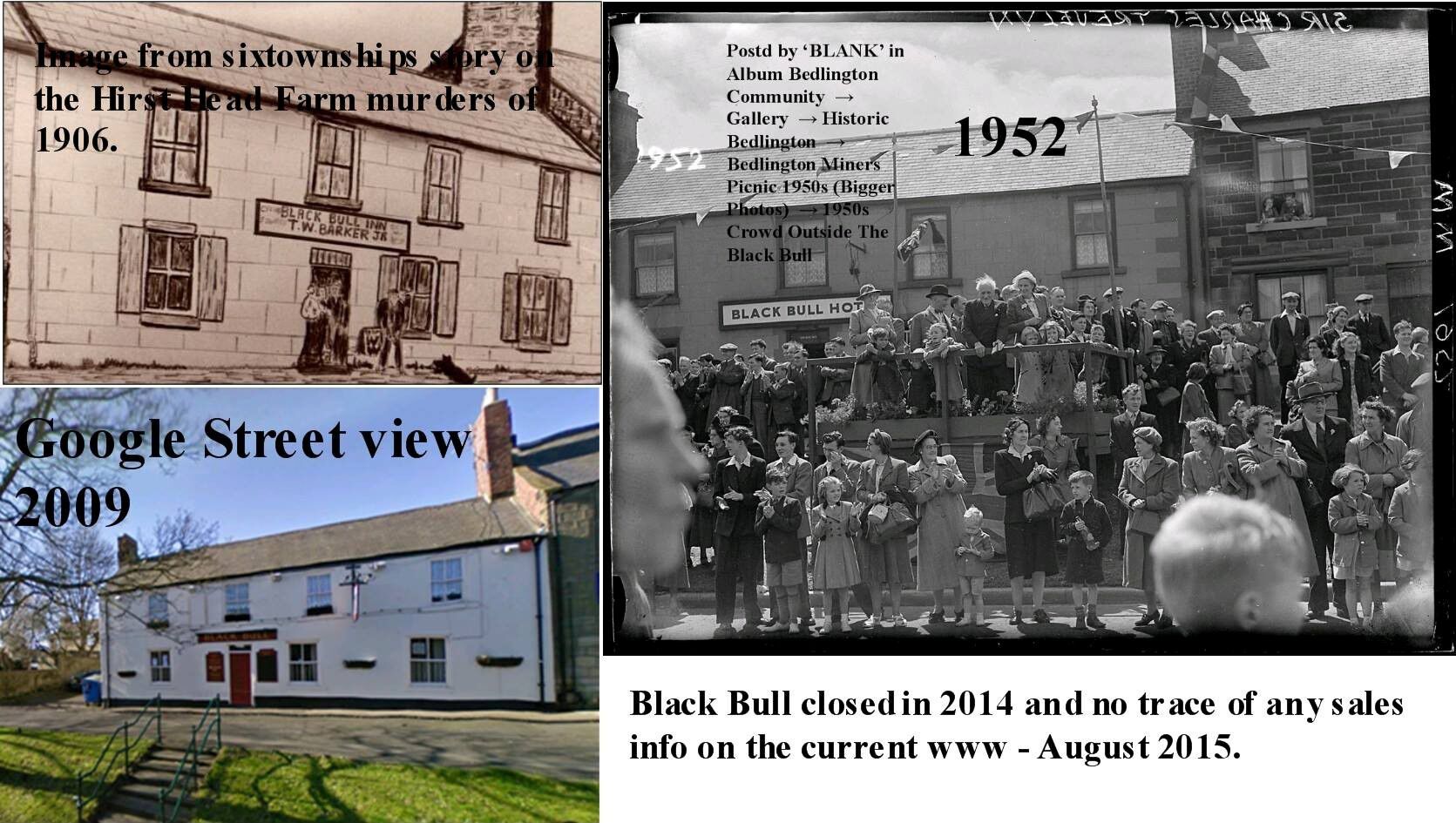
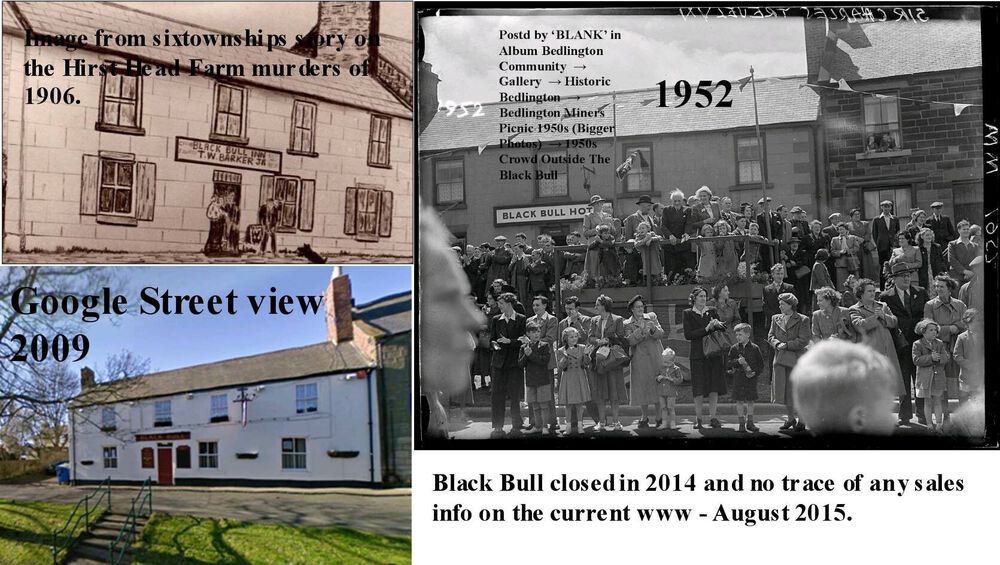
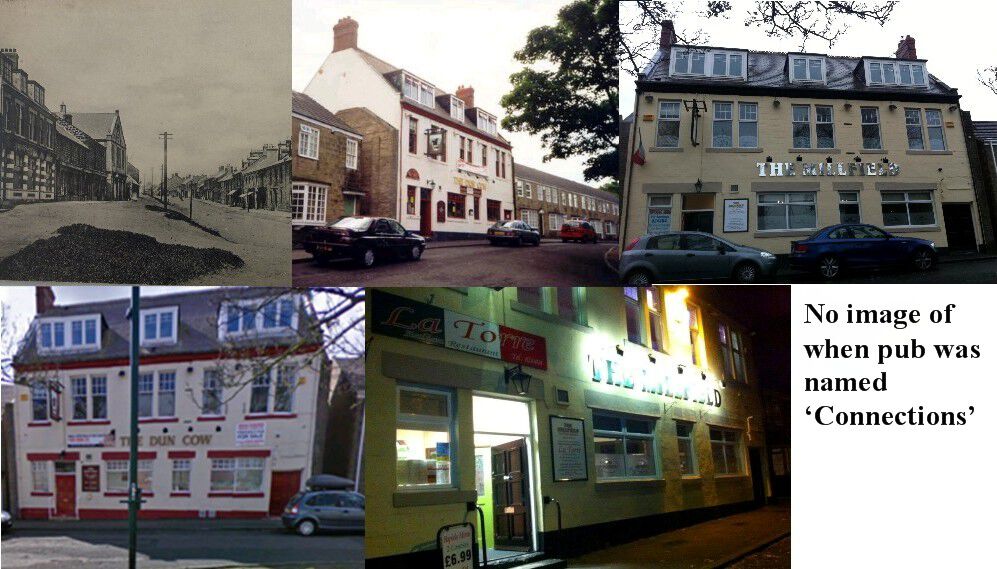
It was The Dunn Coo Bill. I can't remember the exact sequence the name changing took but something like = Millfield (when John Tudor took it over after he finished playing football for NUFC) - then changed to Connections - then back to Dunn Cow - then back to The Millfield and then La Torre, Italian restaurant, joined/partnered The Millfield and as far as I am aware that's how it is now. Street view, 2019, from the entrance to Hollymount Square. Black Bull comp Bedlington's drinking establishments - Then & Now album I did in 2016 :-
-
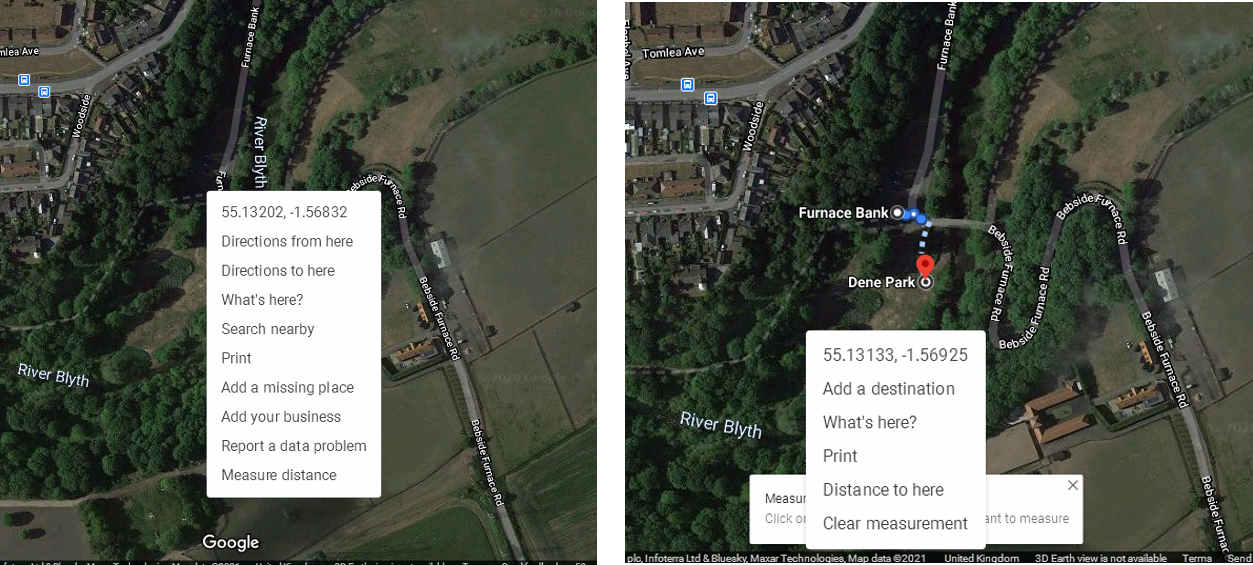
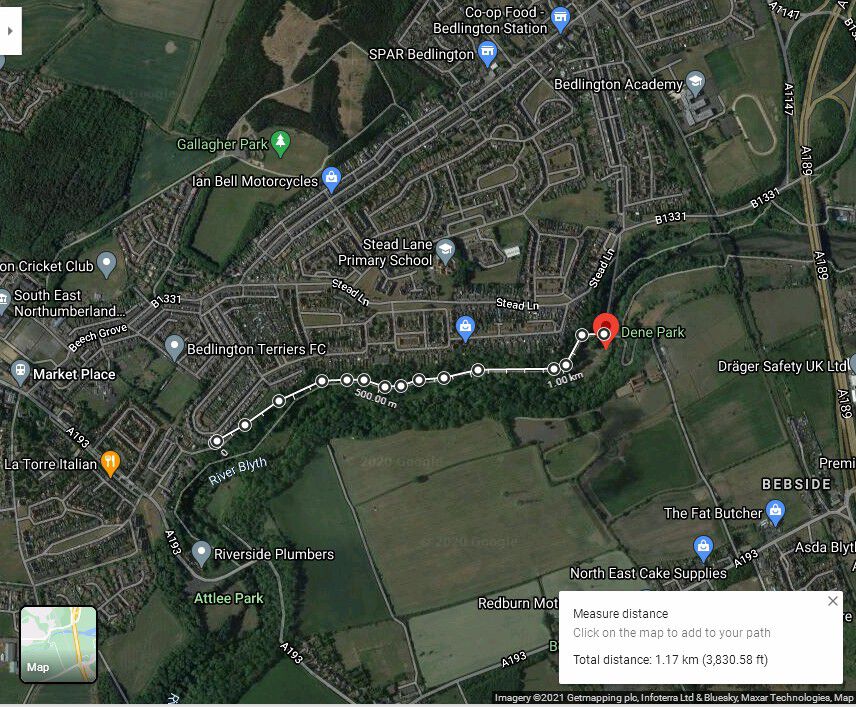
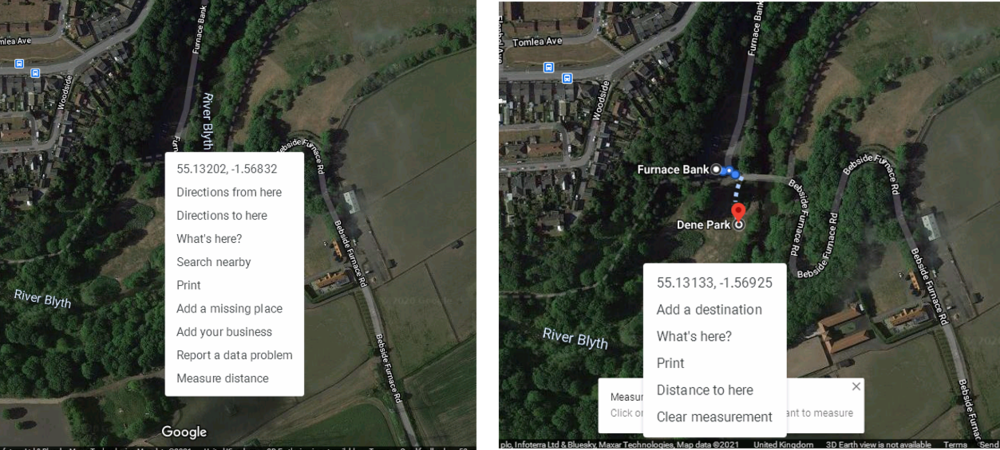
@HIGH PIT WILMA - just for fun I thought I would check how much walking you were doing. I am always playing with Google Street View getting the distance from A to B along a road. I have seen other Apps/Tools etc that walkers use when they go off through the countryside but didn't think you could use Google Street View for checking 'Off The Road' distances. After a bit of clarting I see you can work out the Off the road distances and the distance from Dene Park car park, along the Black Path, to the exit at the top of Beatty Road is approx 1.17Km = 3,830.58 ft = 0.7254886364 miles. And using other options from the menu(s) that pop up in the white boxes you can get different tracking methods All the people with up to date mobiles will already know about this method of planning a route but with my old 1G Samsung = big keys for sending texts - I don't have any access to any Apps
 I think @Canny lass has blown toooo hard on the candles - there must have been one, or two that wouldn't go out😇
 👌1. What is often referred to as ‘the green-eyed monster’? Answer = NV 2. In which English county is the Isle of Purbeck? Answer = 3. Iguanas belong to which reptile family? Answer = Lizard 4. Who composed the opera The Bartered Bride? Answer = 5. Who is the patron saint of messengers? Answer = 6. What was the town of Mechelen in Belgium once famous for? Answer = Lace 7. Who was the first US President to be awarded the Nobel Peace prize? Answer = 8. Which British boxer lost to Joe Louis on points in 1937 when fighting for the World Heavyweight Title? Answer = 9. On which day of the week is a child who is said to be “loving and giving” born? Answer = Friday 10. What did Sir Lancelot’s adultery prevent him from doing? (Keep it clean)! Answer = Finding and washing the Holy Grail 11. What is Gneiss a type of? Answer = Metamorphic Rock 12. Which footballer was the first player to be sent off playing for England? Answer = Alan Mullery I’ll bet you didn’t know …. There are more chickens than people in England. Answer = Yes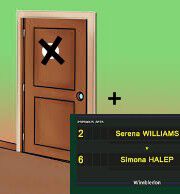

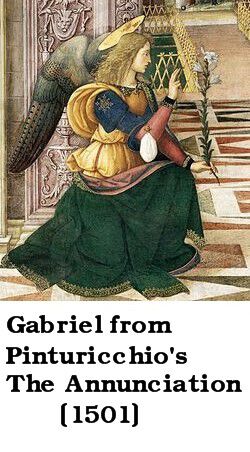

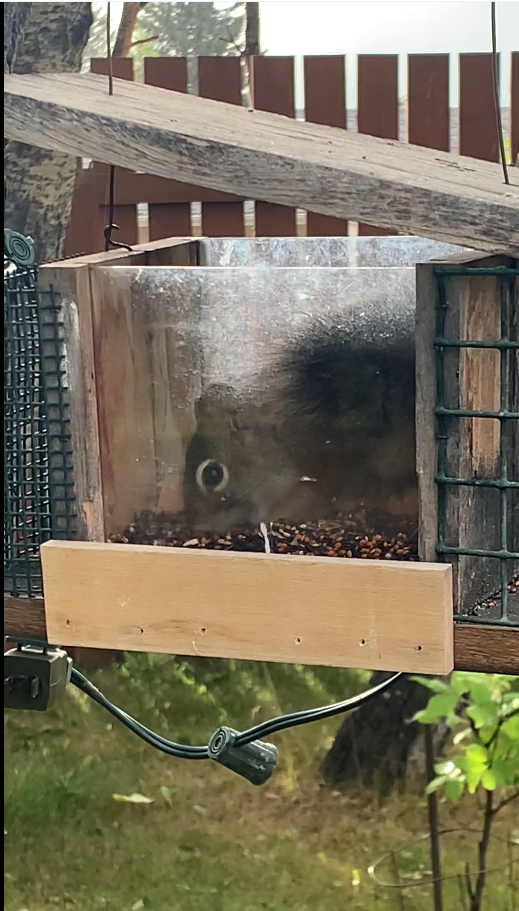
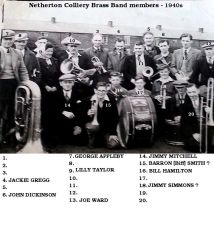 Some names from Joe Grant - Bygone Bedlington FB group.I hope I never get picked up👀@Vic Patterson - No 18 addedTop Twenty Songs for B****t 1 Freedom - George Michael. "Over a million people admitted they voted leave as a joke." ... 2 Don't Look Back in Anger - Oasis. ... 3 Beyoncé - Irreplaceable 4 Should I Stay or Should I Go - The Clash. ... 5 I Will Survive - Gloria Gaynor . 6 Leave Right Now - Will Young 7 Panic - The Smiths. ... 8 The Final Countdown. - Europe 9 All By Myself - Eric Carmen 10 I Think We're Alone Now. Tiffany Alan,wi reference to ya top ten,can wi mek it top twenty?...heres numba elivin... [11] "I WANT TO BREAK FREE" [Freddie Mercury] [ 12 ] " ALL ALONE AM I.." [Brenda Lee ] [ 13 ] " YOU'LL NEVER WALK ALONE" [ ...NEED A SAY?!!] [ 14 ] " TURNING BACK..THE HANDS OF TIME.." [ NEIL SEDAKA ] [ 15 ] "PLEASE STAY " [ DUFFY ] Alan,wi reference to ya top ten,can wi mek it top twenty?...heres numba elivin... [11] "I WANT TO BREAK FREE" [Freddie Mercury] [ 12 ] " ALL ALONE AM I.." [Brenda Lee ] [ 13 ] " YOU'LL NEVER WALK ALONE" [ ...NEED A SAY?!!] [ 14 ] " TURNING BACK..THE HANDS OF TIME.." [ NEIL SEDAKA ] [ 15 ] "PLEASE STAY " [ DUFFY ] 16 Don't Leave Me This Way (Thelma Houston) 17 Never Can Say Goodbye (cos i've got one foot in both camps) (Gloria Gaynor) @Canny lass - 16 & 17 added@HIGH PIT WILMA - we now have a Top 15👍Not sure what happened Vic. First 'copy & paste' looked like the images but when I saved the post the images converted to 'link addresses' so I edited the post; deleted them all and uploaded photos via the ''choose files....'When Canadians Get Bored...

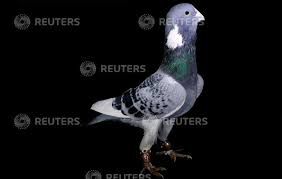
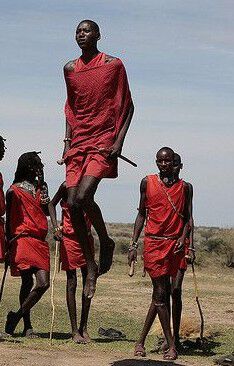
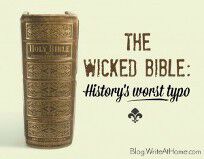
 1. What did Oliver Cromwell forbid anyone to eat? Answer = 2. Which news agency started in 1850 used pigeons? Answer = 3. Each century is longer than the previous by how many seconds? Answer = 2 milliseconds 4. A cow was killed in Cuba by a rocket from which country? Answer = USA - 1960 5. How long is the nose of the Statue of Liberty? Answer = 4’ 6” = Canny Lass told us on May 22nd 2020 6. The liver of which animal is poisonous to humans because of the amount of Vitamin A it contains? Answer = 7. What do Massai tribesmen do to each other when they meet? Answer = ? Jump ? 8. What did Queen Christina of Sweden have that was 10 inches long? Answer = No idea – could it have been a Prince Albert? 9. The Russian postal service will not deliver letters containing what? Answer = valuables 10. Who have fewer hairs on their heads – redheads or blondes? Answer = 11. From an ancient form of which language does the word bride originate? Answer = Gothic 12. The king of which country smoked 100 cigarettes a day? Answer = 13. In which edition of the bible was the seventh commandment given as “Thou shalt commit adultery”? Answer = The bible according to 14. Which language could King George 1 not speak? Answer = English 15. Nelson’s body was returned to England in a barrel of Sherry. True or false? Answer = False – it was :- 16. Who started the custom of carrying a flaming torch from Athens to the site of the Olympic Games? Answer = Carl Diem 17. What did Queen Elizabeth 1 ban from the royal court? Answer = Catholics ? 18. Approximately how many miles of corridor are there in the Pentagon? Answer = 28.2 Km 19. In which American state is there a law stating that pets must carry a light on their tails at night? Answer = No idea 20. What was the result of Napoleon’s attempted suicide with poison? Answer = He lived I’ll bet you didn’t know …. Over 72 000 pairs of nylon stockings were sold in New York on the very first day they were put on sale. Answer = I didn’t. I’ve never worn nylon stockings but my brother used to wear tights at night ---------------------------------------------------- when he went all night fishing off Cambois rocks


 @Les curry - thanks for the info - I've updated the photo. I checked through the album and I could only find one other photo with someone call Curry on it. It's a photo labelled '1953possibly' and No 8 in the photo is named as B. Curry. Could that be a relation of yours?
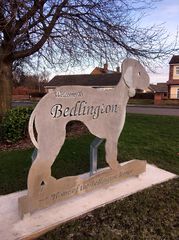 The phantom dog dresser didn't add anything this 2020 xmas period - 😷. Lets hope they are ok. December 2020.mp4@Canny lass - Happy New Year from Trotter - The dog ---------------- and Wilf