
On Bedlington.uk Now...
- Past hour
-
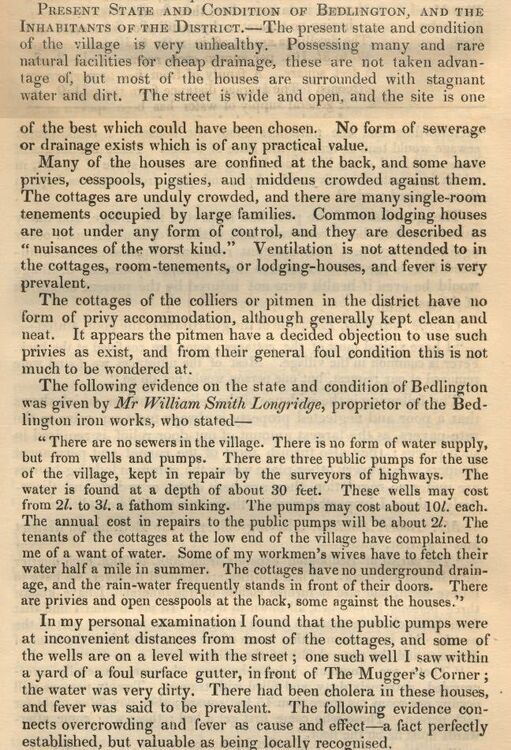
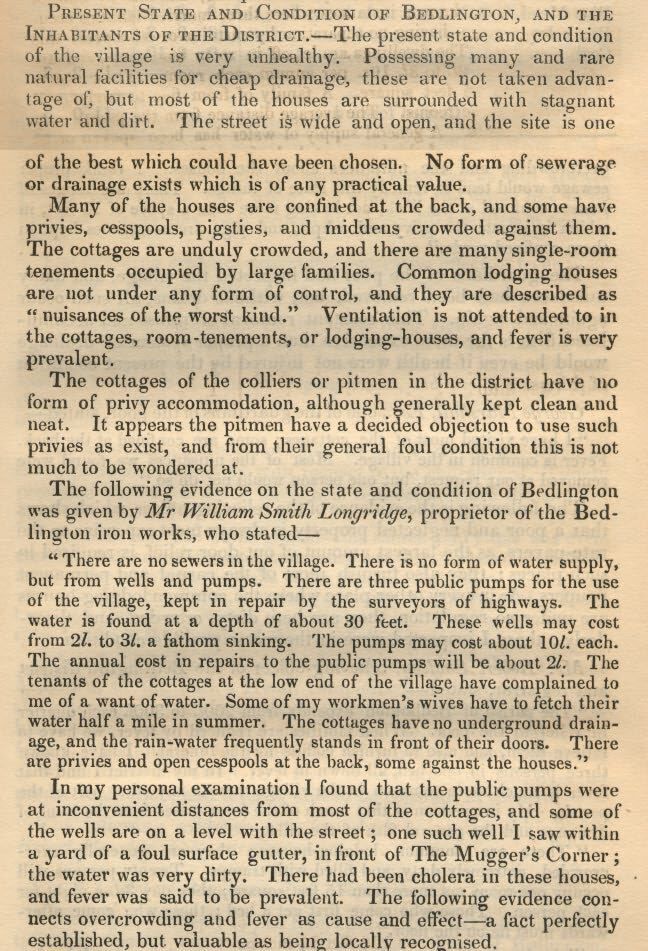
Found this little gem while rummaging for information on the whereabouts of the Bedlington Post Office, mid 19th century. It is a "Report to the General Board of Health for Morpeth re Cholera, dated 1849. It certainly makes me grateful and thankful for how Bedlington is today.
- Today
-
A bakery that's already been a big hit elsewhere bin the North East will open a brand new shop this weekendView the full article
-
The 'Market Place' Post Office journey.
Alan Edgar (Eggy1948) replied to Alan Edgar (Eggy1948)'s topic in History Hollow
I don't have census access and the only info, matching what @Canny lass has found, is an Extract from: History, Topography, and Directory of Northumberland...Whellan, William, & Co, 1855. :- https://co-curate.ncl.ac.uk/bedlingtonshire-1855/ = BEDLINGTONSHIRE BEDLINGTONSRIRE is situated at the north-east corner of Castle Ward, and is bounded on the north by the river Wansbeck, on the west by the parishes of Morpeth and Stannington, on the south by the river Blyth, and on the east by the German Ocean. It comprises the townships of Bedlington, Camboise, Choppington, Netherton, Sleekburn (East), and Sleekburn (West), whose united area is 9,011 acres. The population in 1801, was 1,422; in 1811, 1,488; in 1821, 1,862; in 1831, 2,120; in 1841, 3,155; and in 1851, 5,101 souls. The hundred of Bedlingtonshire and the parish of the same name are co-extensive. We possess no authentic information regarding the proprietorship of this parish, anterior to the commencement of the tenth century, when we find that it was purchased by Cutheard, the second Bishop of Chester-le-Street, who added it to the possessions of the see. Subsequent to the removal of the bishopric to Durham, it still continued to form an integral part of the palatinate, possessing its own courts and officers of justice who were appointed under the bishop's commission, until the reign of Henry VIII., when the Crown resumed this privilege, and ordained that in all matters of law and civil jurisdiction, Bedlingtonshire was to be considered a member of the county of Durham. This ordinance remained in force till October, 1844, when, in pursuance of the Acts 7 and 8 Vict., c. 61, it became a portion of the county of Northumberland. The ancient records inform us that lands in this parish were formerly held of the Bishops of Durham, by the families of Elliott and Hertford, by fealty, and the payment of a small rent, though the great majority of the inhabitants held theirs by servile tenures. During the civil wars, the possessions of the see of Durham having been sold by order of the Parliament, this manor was purchased by Robert Fenwick, Esq., who, on the restoration of the regal power, was obliged to restore it to its original proprietor. For parliamentary purposes Bedlingtonshire is included in the borough of Morpeth. BEDLINGTON is a township and considerable village in the parish of the same name, the property of W. W. Burdon, Esq., George Marshall, Esq., and others. The area of the township is returned with that of the parish, and its rateable value is £7,031 15s. The Bishop of Durham is lord of the manor. Here are several stone quarries, three collieries, and the Bedlington Iron Works, which rank among the oldest and most extensive in the north of England. They afford employment to a great number of persons, who are engaged in the manufacture of chain cables, bolts, bar and sheet iron, and other articles. The Glebe Colliery is worked by Longridge and Co., and the Bedlington Colliery by Davidson and Co. These two establishments employ respectively 200 and 400 persons. THE VILLAGE of Bedlington is pleasantly situated on the summit and slope of an eminence, about four and a half miles S.S.E. from Morpeth, and consists principally of one long and irregular street, forming a kind of sloping avenue from the river Blyth, which is navigable for small craft to the Bedlington Iron Works, about a mile east of the village. THE CHURCH, dedicated to St. Cuthbert, whose remains rested here for one night, in 1069, is a small Gothic structure, enlarged and repaired in 1818, at which time the workmen employed in these repairs and alterations discovered, on the north side of the Church, three grave stones, ornamented with crosses and swords in the style of the eleventh or twelfth centuries, and one of them had the request '' Ora pro nobis" upon it. In pulling down the north wall, there was also brought to light a fragment of a pillar, fourteen inches long, on which the remains of an inscription to the following effect were plainly discernible "CRVX, or LVX VNDIQUE FVLGET AMATA.'' In addition to the above, there were found the remains of a man, supposed to be those of Cuthbert Watson, a well known somnambulist, who was killed upon the spot where they were discovered. He had risen in his sleep, February 11th, 1669, and was in the act of climbing the north buttress of the tower, apparently with great ease and firmness, when a person, who was passing by at the time, dreading the danger of the poor man's situation, spoke to him, and he awoke, fell, and was instantly killed. This story is supported by the traditions of the place, by an entry said to be in the parish register, and by the above date, and the words "Watson's Wake," cut upon the buttress. The register of this parish comences in 1654. The living, a vicarage in the archdeaconry of Northumberland and deanery of Newcastle, is valued in the Liber Regis at £13 6s. 8d. ; gross income £455. The patronage is vested in the Dean and Chapter of Durham. Rev. Edward C. Ogle, vicar; Rev. Robert Taylor, Curate. The Baptists, Presbyterians, Primitive and Wesleyan Methodists, have commodious places of worship in the village. THE MECHANICS’ INSTITUTION, which comprises a news-room, and a good library, was established about five or six years ago by a few young men of the village, aided by the Earl of Carlisle, the Bishop of Durham, the Rev. E. C. Ogle, vicar, Captain Howard, and A. R. Fenwick, Esq, J.P.; James Gibson, and John B. Gibb, secretaries; Robert Young, librarian. THE COURT HOUSE, situated near the centre of the village, is a substantial and suitable building, containing a lockup, consisting of two apartments. Robert Drummond, superintendent constable for Bedlingtonshire district, is court keeper. Petty Sessions are held here once a month: the Rev. E. C. Ogle; M. J. F. Sidney, Esq., of Cowpen Hall; Sir M. W Ridley, Bart., Blagdon ; A. R. Fenwick, Esq.; and W. W. Burdon, Esq., are the presiding magistrates. The village stands much in need of a more copious supply of water, the limpid element being only obtainable from a few pumps and wells, which often become dry during the summer months. Sanitary improvements, and the introduction of gas are much to be desired. The ruins of an old hall are visible on the south side of the village. POST OFFICE, BEDLINGTON. John Urwin, postmaster, Letters arrive here, from Morpeth, at 10-1O a.m., and are despatched thereto at 2-35 p.m. Money Orders are issued and paid here. -
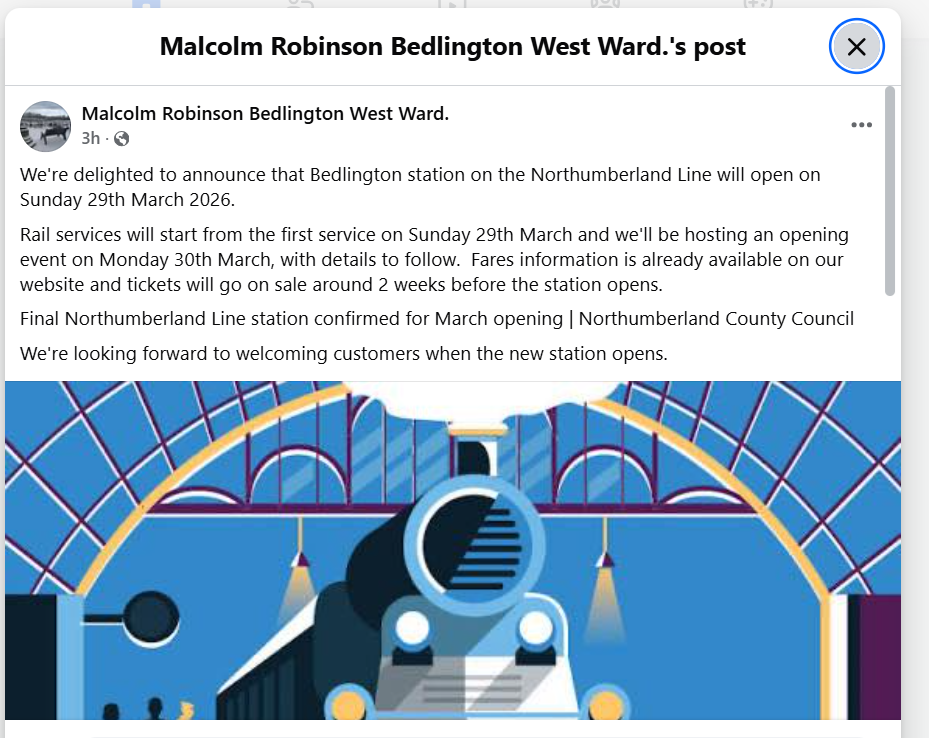
Northumberland Rail Line.
Alan Edgar (Eggy1948) replied to Malcolm Robinson's topic in Talk of the Town
-
The project will finally be complete next monthView the full article
-
 Dillon Knox joined the community
 - Yesterday
-
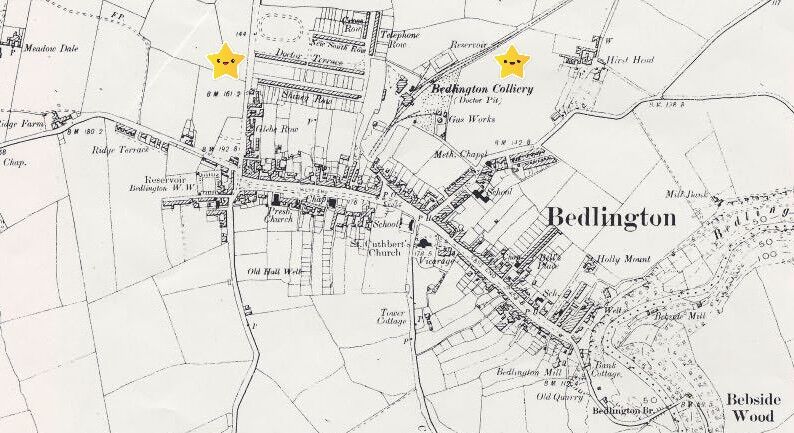
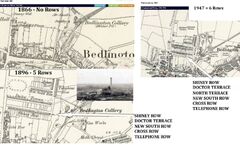
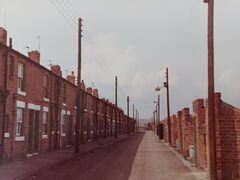
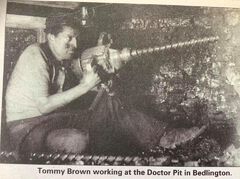
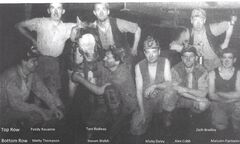
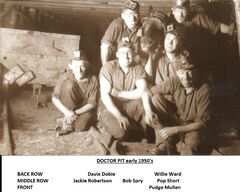
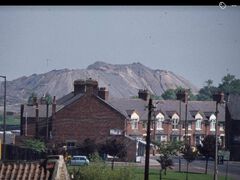
@Nicola Riley welcome to the forum. Seeing your post made me check the album, Doctor Pit and Rows, we have in the gallery section and I see we don't have the old maps showing the rows so I have added a compilation from the old maps showing the siting of the rows. This 1896 map shows the location of the Dr Pit and rows within the town :-
-
Doctor Pit and Rows
Images added to a gallery album owned by Alan Edgar (Eggy1948) in Historic Bedlington
Info on the Durham Mining Museum site is :- First shaft was sunk 14th July 1854 Colliery opened in 1855 Colliery closed 2nd March 1968 -
-
.thumb.jpg.7493ddab4a696108cf2b849323d3c155.jpg) @Nicola RileyHi Nicola, welcome to the forum. Sorry to hear about your mam's death. If I'm thinking of the right person then I went to school with Joyce - Westridge Secondary Modern 1959 - 1962. A very nice girl. She wasn't in my class but in the same class as my best friend so we hung about together during our breaks. You'll find a couple of school photos of that Joyce in the Gallery, Westridge album. Might be worth a look. I think you may have found the topic related to Fountain Yard where your nanna's brothers are mentioned. I don't think Fountain Yard comes up in any other topics. Dr Pit is up for discussion frequently. Type "Dr Pit" (inverted commas are important) in the search box, top right and you'll get a list of where it appears.
@Nicola RileyHi Nicola, welcome to the forum. Sorry to hear about your mam's death. If I'm thinking of the right person then I went to school with Joyce - Westridge Secondary Modern 1959 - 1962. A very nice girl. She wasn't in my class but in the same class as my best friend so we hung about together during our breaks. You'll find a couple of school photos of that Joyce in the Gallery, Westridge album. Might be worth a look. I think you may have found the topic related to Fountain Yard where your nanna's brothers are mentioned. I don't think Fountain Yard comes up in any other topics. Dr Pit is up for discussion frequently. Type "Dr Pit" (inverted commas are important) in the search box, top right and you'll get a list of where it appears. -
The £12.7 million scheme will provide annual savings by avoiding the use of costly external placementsView the full article
- Last week
-
 My Mam, Joyce Riley nee Butcher/Collingwood, recently passed away on the 1st February 2026. I have for many years now been researching our family tree. A contributor to the page commented on #1 &2 Fountain Yard. Mam was born @#1 in 1947. Her mam, Margaret Annie Collingwood, was also born at Fountain Yard in 1908, so that was possibly a family home. My Grandad, William Henry Quilter Butcher was born in 1901 @ Doctor Pit. I would love to know if there is anyone who knows more about the history of these places, especially where mam was born. Her grand Uncles; Nanna's brothers ; James Robert Collingwood, and George Collingwood are mentioned as casualties of The Great War. Thankfully mam was able to visit their memorials.
 -
Nicola Riley joined the community
-
The 'Market Place' Post Office journey.
Canny lass replied to Alan Edgar (Eggy1948)'s topic in History Hollow
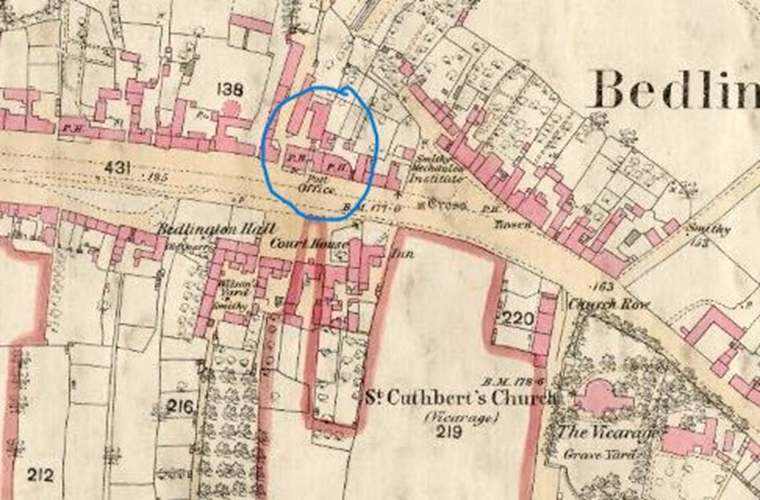
Sorry about that! Going further back, I found John Urwin in another trade directory, History, Topography, and Directory of Northumberland 1855 p. 897 and see that even then he was Bedlington’s Postmaster while at the same time running his chemist and druggist business. The question arises – did Urwin live in the same place? I looked him up in the 1851 census. The 1851 census doesn’t reveal so many household addresses. A couple of prominent buildings are named: Fountain Hall and the Vicarage. Apart from Sun Inn and the Red Lion Inn no pubs are named on Front Street. That doesn’t mean to say that pubs did not exist. The number of “Innkeepers”, “Beer-house keepers” and “Publicans registered in the town says otherwise. However, I could not find John Urwin living next door to any of them, suggesting that he may not always have lived next door to the Grapes Inn. Following the enumerator’s route from the Market Place towards the Red Lion I find at schedule nrs. 215 and 214 a “retired innkeeper” and an “innkeeper” next door to each other. Though not named as such, their proximity to the Market Place and the fact that they are neighbours leads me to believe that they are the Masons Arms and the Grapes Inn. Continuing westwards and 28 dwellings later (presumably located both on Front Street and in the various yards) I find John Urwin at schedule nr 203. Moving on, past another 16 dwellings I find the last dwelling of West End, on the corner of Glebe Row, at sch. Nr. 187. It seems to me therefore that John Urwin is living nearer the Red Lion than the Market Place and this location could therefore possibly be Baptist Yard. John Urwin was not a local lad, having been born in Lanchester, Durham. When he moved to Bedlington I can't say but as he was, with certainty, the postmaster, at least between 1855 and 1858 he must have held that position when the telegraph system was installed but I haven't been able to establish at which address. The OS map of 1860shows a Post Office situated between the Grapes Inn and the Mason’s Arms at the lower end of Front Street West. As maps require a few years of research and survey work prior to publication, it’s fair to assume that Urwin may have lived and worked here in 1858 in his capacity as Postmaster. If this is the case then the telegraph system could have been installed here, rather than in Baptist Yard. Its installation could well have been the reason for his move. A bit more work required yet.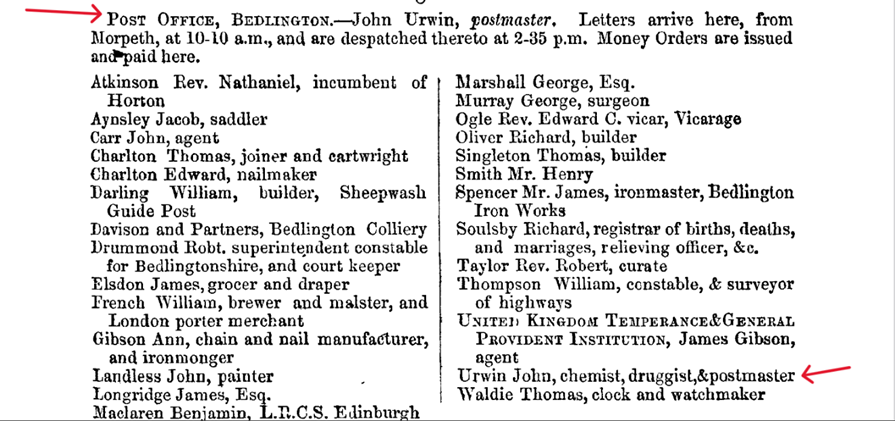
-
The 'Market Place' Post Office journey.
Canny lass replied to Alan Edgar (Eggy1948)'s topic in History Hollow
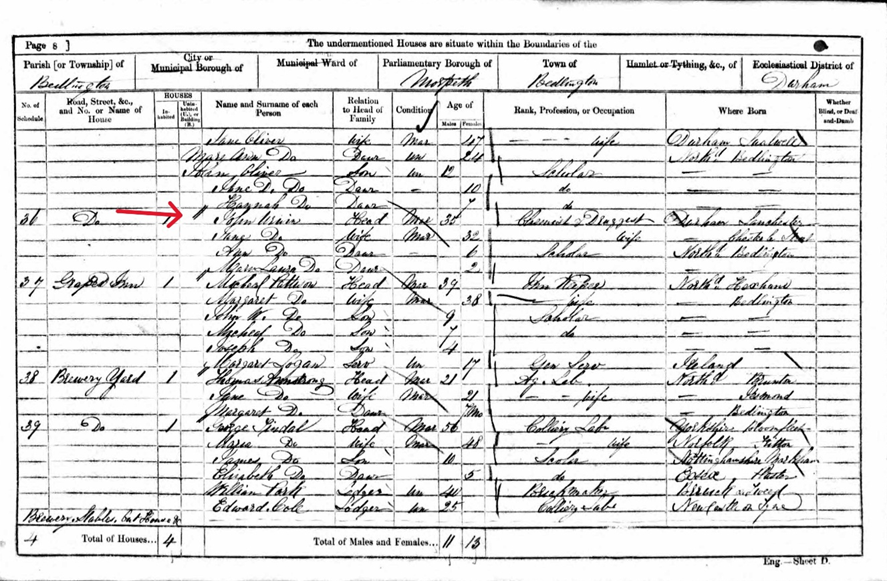
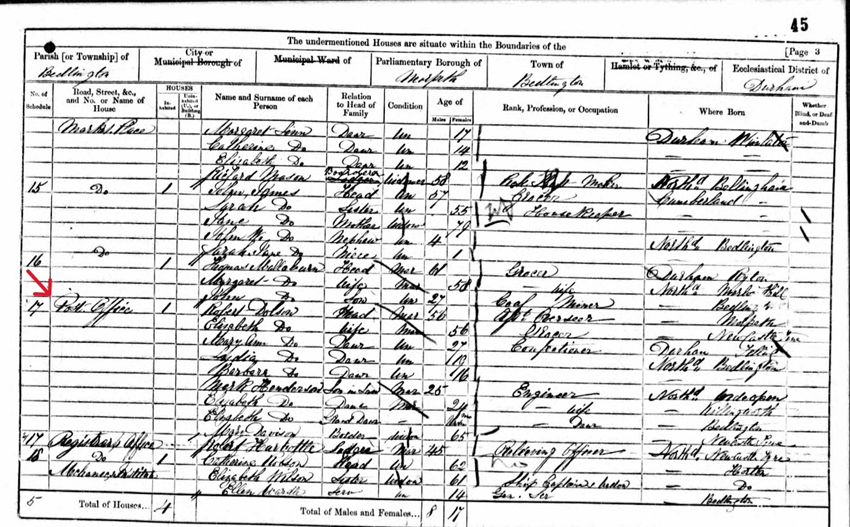
The many comprehensive trade and residential directories are a great source of information covering such things as businesses, notable residents, tradespeople and local institutions - of which the Post Office is but one - so I spent yesterday (and a fair bit of today) rummaging through those I have access to and I thought a fair place to start would be the 1858 Post Office Directory of Northumberland (later called Kelly’s Directory). Part of the entry for Bedlington, p. 26, looks like this: Bottom left I can see that Bedlington did indeed have a “Post Office”. The Postmaster was John Urwin and letters were received by him, from Morpeth, by mail cart. Middle right we can see that John Urwin was a man of many talents when, under the businesses section, he appears as chemist, druggist and postmaster. I thought that was odd but further rummaging through the GPO and Post Office Museum sites shows that it was more than common to combine the role of ‘Postmaster’ with another profession. It seems that by the 1850s the postal system was so well developed that “no village, however insignificant” was “without its receiving-house”. By 1855 there was a network of almost 10, 500 post offices across the country “(made up of 920 Head Post Offices and 9,578 Sub-Post Offices and Receiving Offices)”. There were, in other words, several types of ‘Post Office’, whereof the receiving house had least responsibility. For them, it sufficed to receive letters from the Head Post Office and display them in a window so that anyone passing could see if they had mail to collect. The Postal Museum (online) describes the role of the Postmaster as “a salaried male official in charge of PO operations and staff within a specific area defined by its Post Town”. The term Postmaster, they add “was often used colloquially to refer to a Sub-Postmaster. Most Sub Postmasters and Sub Postmistresses were not employed by the Post Office. They had a main business, like a shop, which offered Post Office services”. Those who took on this role were often considered central, trusted figures in their community. That explains a lot! To me it seems that John Urwin was a sub-postmaster and, looking quickly through several other small towns in the directories, the terms ‘Postmaster’ and ‘Post Office’ are used fleetingly for what appear to be Sub-Postmasters and Sub-Post Offices – having mail delivered to them once a day from a Head Post Office by whatever means available. In 1830 mail was distributed by train for the first time and when Morpeth got its station, in 1847 (on the London to Edinburgh line), it appears to have become the location of the Head Post Office for quite a large area, including Bedlington, to which it distributed mail for further distribution or, more commonly, for collection. Next, I looked at the nearest census returns (1861) to see where John Urwin lived: There he is, schedule nr 36, right next door to the Grapes Inn. His neighbour on the other side, at schedule nr 35, is the Masons Arms: That all fits in nicely with what we can see on the 1860 OS map below. I can also mention here that the Post Office can be seen to have opened in the Market Place (Sch.nr 17). It is occupied by Robert Dobson who gives his occupation as “Ass’t. Overseer” rather than any sort of Post Office worker. Perhaps this dwelling is above the Post Office. I'll take a break here as one of the grandchildren has just arrived. I'll try to post the rest later.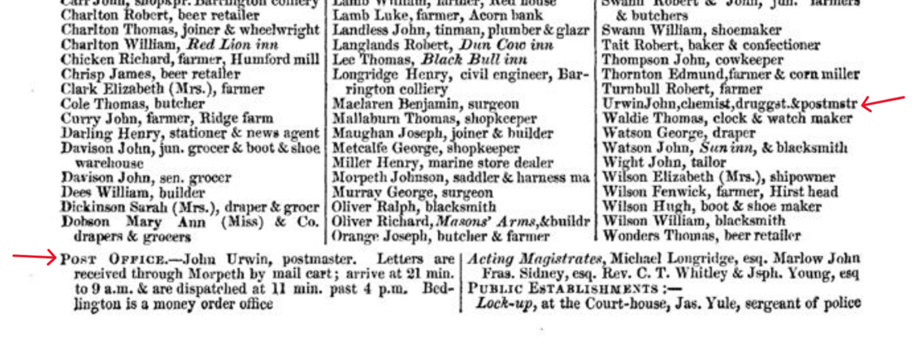

-
The 'Market Place' Post Office journey.
Alan Edgar (Eggy1948) replied to Alan Edgar (Eggy1948)'s topic in History Hollow
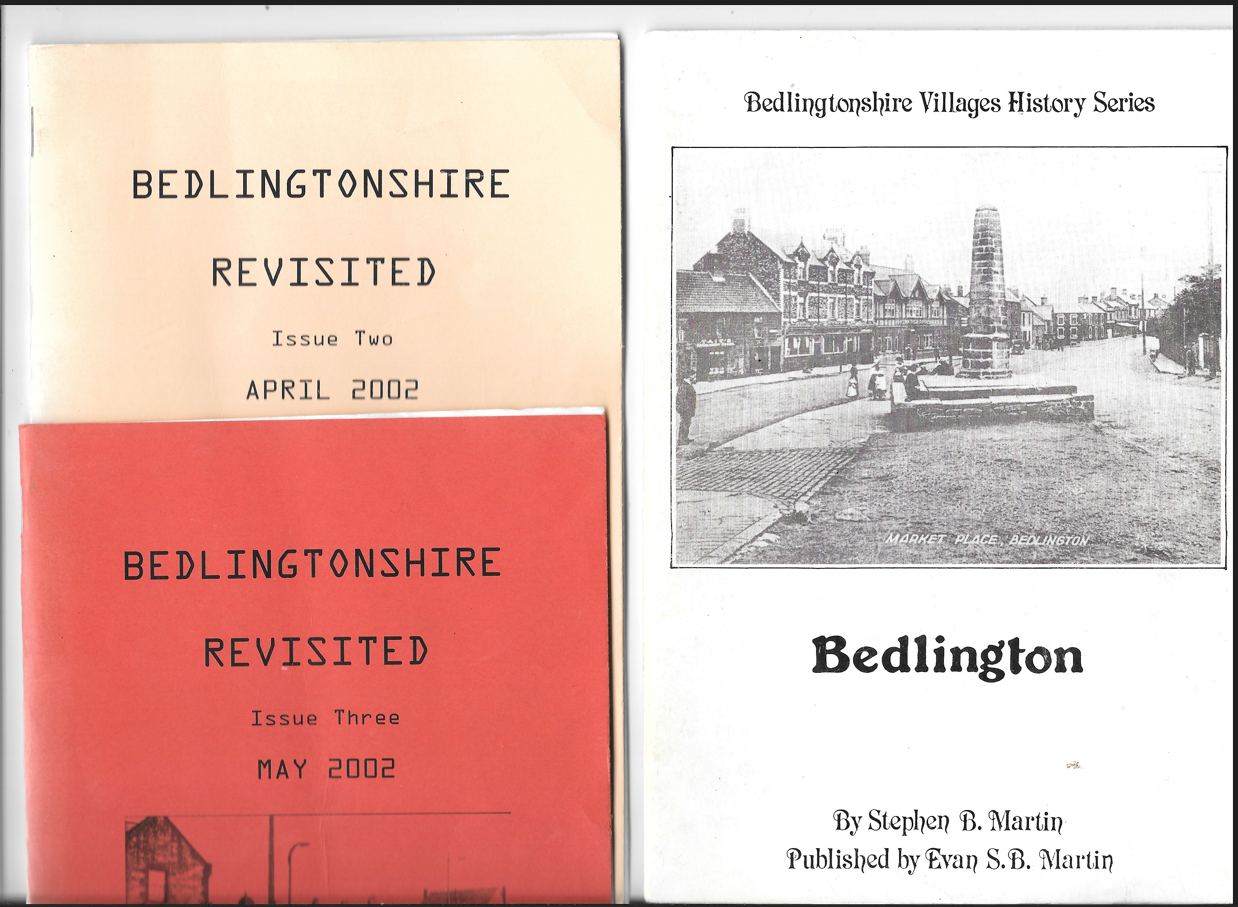
@James never seen the Bedlingtonshire Revisited booklets. Were they by the Martin family? I have seen the text you posted from the ChatGTP (AI chatbot developed by open AI) and I am surprised it gives the Six Townships Community History Group, as a soure of info on the PO. I know the Sixtownships used to be a Facebook group run by @johndawsonjune1955 and it changed it's name to Past Times History group buy I can't remember the exact year it changes it's name. Pity John Dawson kicked me out of the group otherwise I would ask him where he got the place & year for the 1st PO opening -

Whatever You Do Don't Mention Illegal Immigration!
HIGH PIT WILMA replied to threegee's topic in Chat Central
A bit late,marra,but we dinna live in a free speech country any mair!! See my new topic titled "Banned"! Cheers Folks! HPW. -

The 'Market Place' Post Office journey.
James replied to Alan Edgar (Eggy1948)'s topic in History Hollow
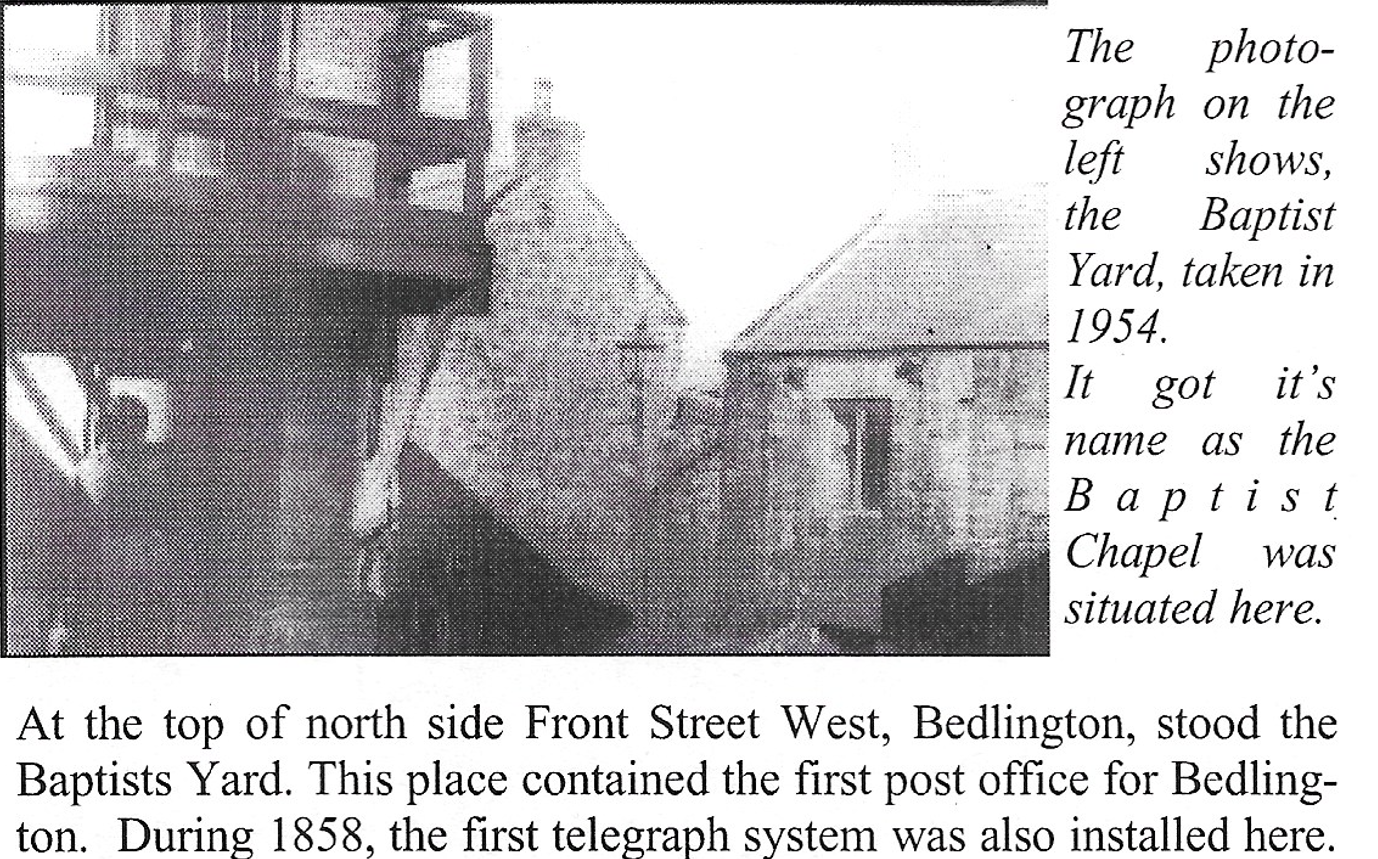
The 3 booklets note that the first post office was located at Baptist Yard. It seems logical that the town’s first, more primitive post office would have been the location where the towns first telegraph messages were received, (the Victorian equivalent of email or texting.) I can find no reason to believe that the photo is not the Baptist Yard. The following is from ChatGPT. Bedlington’s First Post Office and early Postal Presence in Bedlington · The earliest record of a postal connection for Bedlington shows that in 1834 mail was already being handled for the town via the Morpeth post town. This means Bedlington had recognized mail services in the official British postal system from at least that year, even if there wasn’t yet an independent office building in the town itself Historical timelines compiled by the Six Townships Community History Group, note that a post office with a telegraph system was present by in the Baptist Yard in1858. This suggests that a functioning postal office at least capable of handling mail and telegraph messages existed in the mid-1850s. As the postal system became more organised in the UK, Bedlington’s postal facility was officially incorporated into the national Post Office numbering system. This moved operations from a yard setting into a more formal postal classification. By 1863, Bedlington had its own Railway Sub Office (RSO) designated with the code B75. An RSO was typically a postal facility associated with a railway station or rail mail sorting point, vital during the 19th-century expansion of mail transport via rail. After operating as a Railway Sub Office, the Bedlington postal facility later became an Independent Sub Office in 1905, indicating a more standard and autonomous local post office service. The postal office’s officially identity evolved over the 20th century, sometimes tied to railway-based names as the town and its services shifted: Bedlington Colliery office existed and changed name in the early 20th century. Bedlington Station became a recognised postal identity around 1936 Eventually the Postal Identity was simply “Bedlington”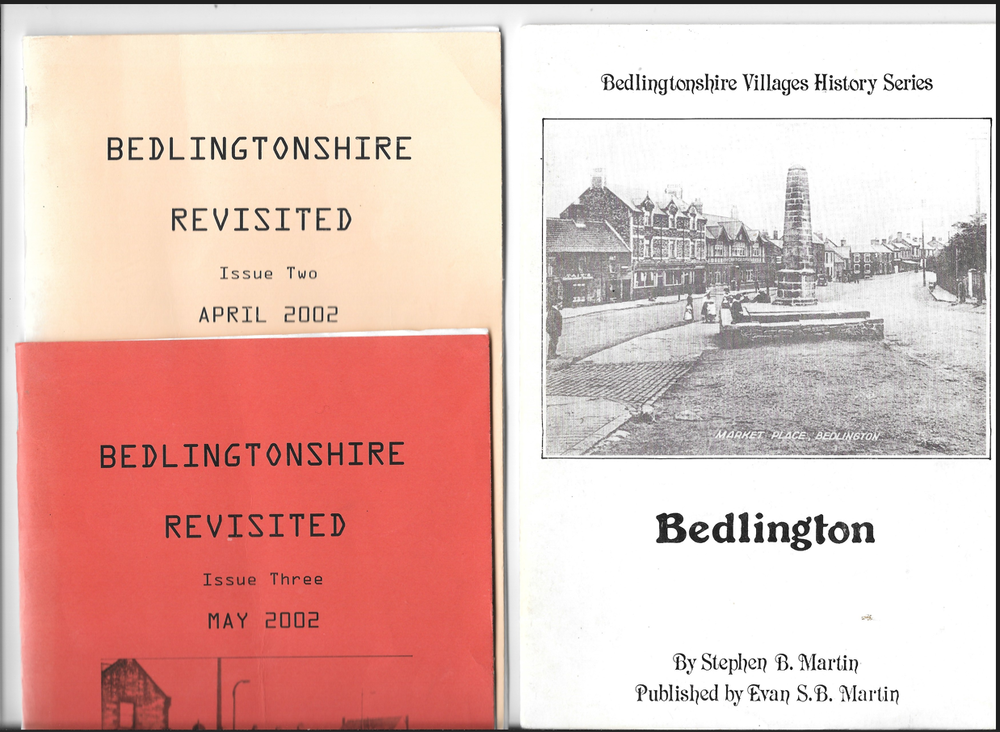
-
The 'Market Place' Post Office journey.
Alan Edgar (Eggy1948) replied to Alan Edgar (Eggy1948)'s topic in History Hollow
@Canny lass this dosen't prove anything but I see in John Dawson's Bedlington Timeline he has an entry :- '1858 Bedlington's first post office had a telegraph system installed. It was situated in the Baptist Yard' - but no reference to where the info came from. i don't know if John still runs the Facebook group - Past Times History group - as he kicked me out of the group a couple of years ago because he thought I was an admin, and I wasn't and never had been, on the Ashington group and had deleted his post about selling his books/CDs on the local area. -
The 'Market Place' Post Office journey.
Alan Edgar (Eggy1948) replied to Alan Edgar (Eggy1948)'s topic in History Hollow
I'm with you and I doubt we will stumble on anything that proves it one way or the other. Can'tm remember ever having seen Baptists yard identified on the old maps I hva looked at -
The 'Market Place' Post Office journey.
Canny lass replied to Alan Edgar (Eggy1948)'s topic in History Hollow
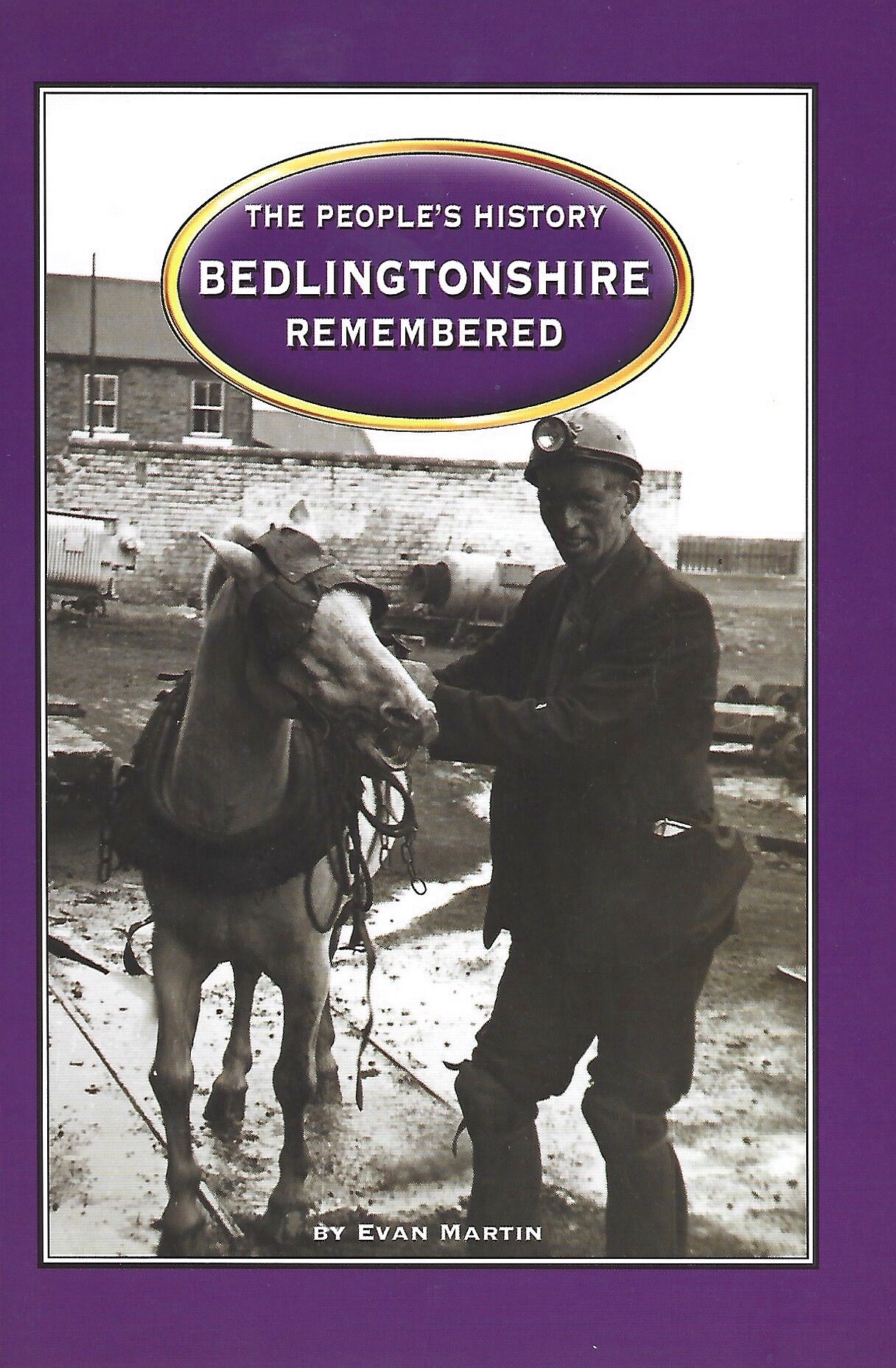
I doubt if the Sleekurn edition would cover Front Street, West End, Alan. I don't have any of Stephen B Martin's books but I have several by Evan Martin - including the one above, posted by Vic. Evan Martin uses the same photo of 'Baptists Yard' accompanied by almost the same text. Unfortunately he doesn't disclose the source of the photo or the information in the text. He does say that the "The Baptist Yard" contained " Bedlington's first Post Office and in 1858 the telegraph system was installed there." (page 99). I find it somewhat strange that just 2 years after such an investment, the Post Office would move to new premises nearer the Market Place as shown on the 1860 map. It's also worth remembering that maps aren't created overnight. They take several years of survey work before being published, so the location of the PO shown on that map may well have been surveyed prior to 1860. I have to admit that I have wondered if that really is Baptist Yard and if the PO was ever located there. -
The 'Market Place' Post Office journey.
Vic Patterson replied to Alan Edgar (Eggy1948)'s topic in History Hollow
Unfortunately he doesn't give any references but only acknowledgements.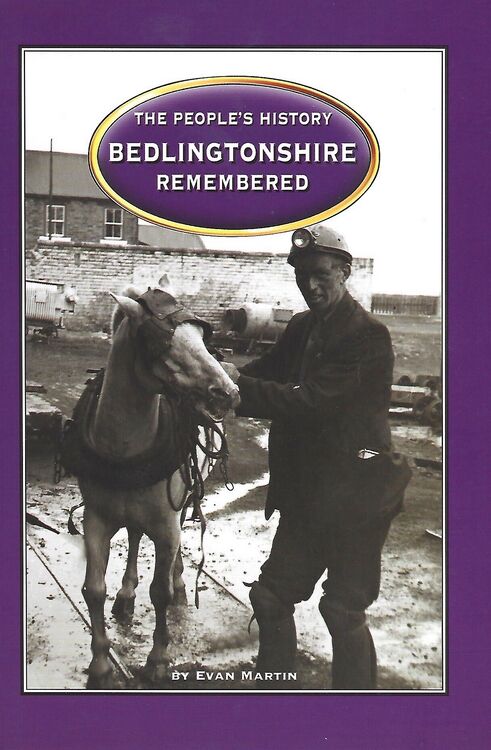
-
 Jared Darbyshire joined the community
 -
The 'Market Place' Post Office journey.
Alan Edgar (Eggy1948) replied to Alan Edgar (Eggy1948)'s topic in History Hollow
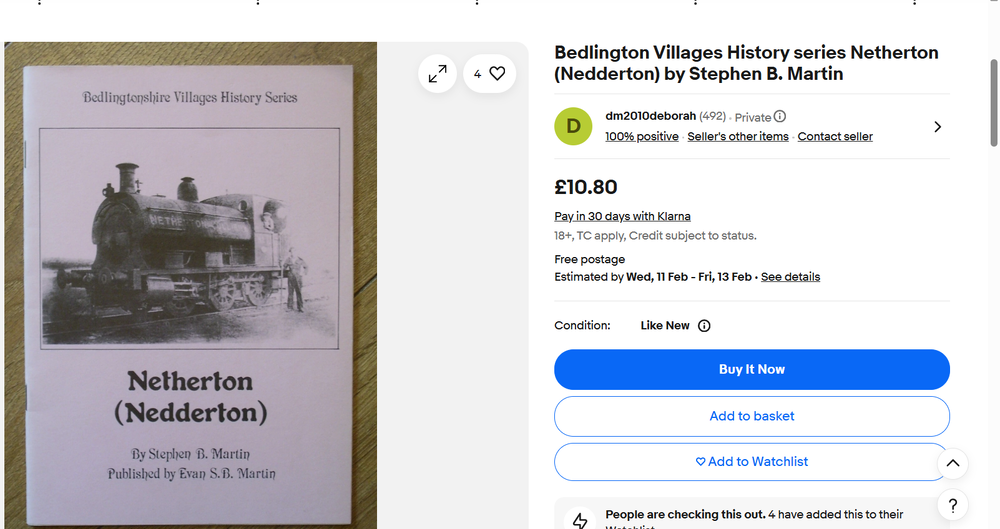
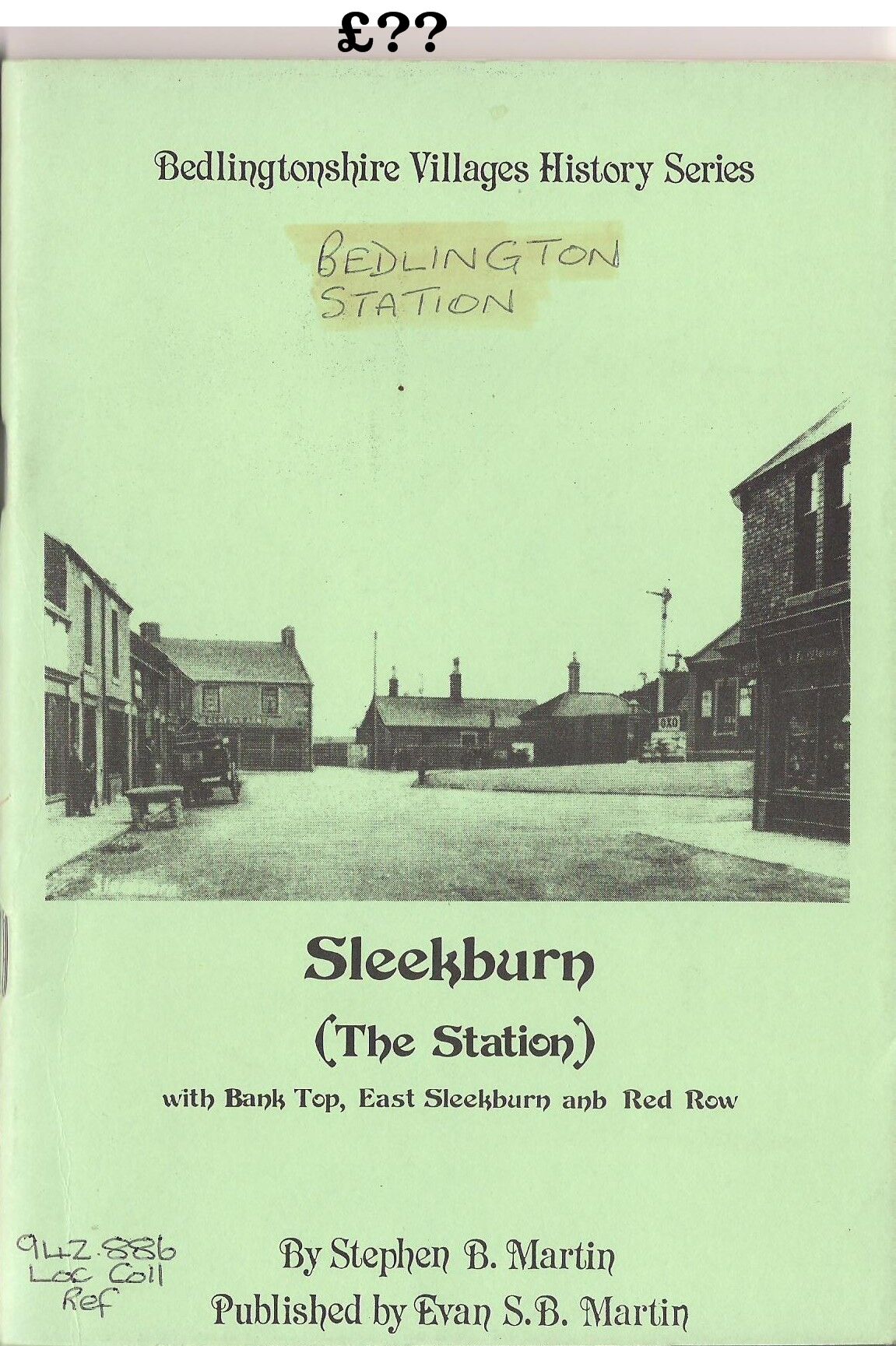
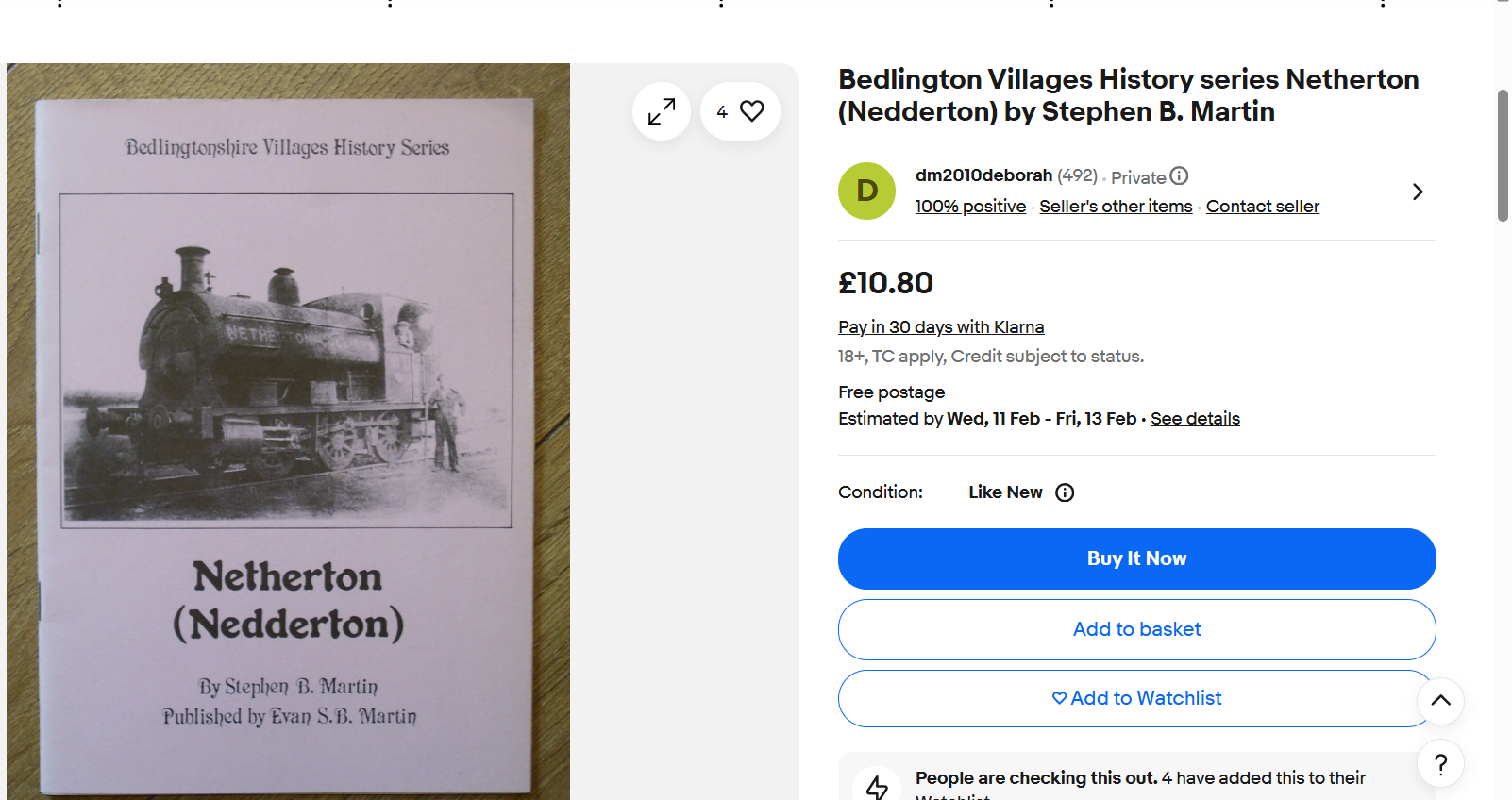
@Canny lass - I only have one booklet by S B Martin and I will have a look through it and see what's in it (it's years ago I got t of ebay). I have googled it but no copies avialble. This is the cover :- Don't know if that is the one @James is referring to. When I was Googling for Stephen B Martin books on Bedlington this one came up :-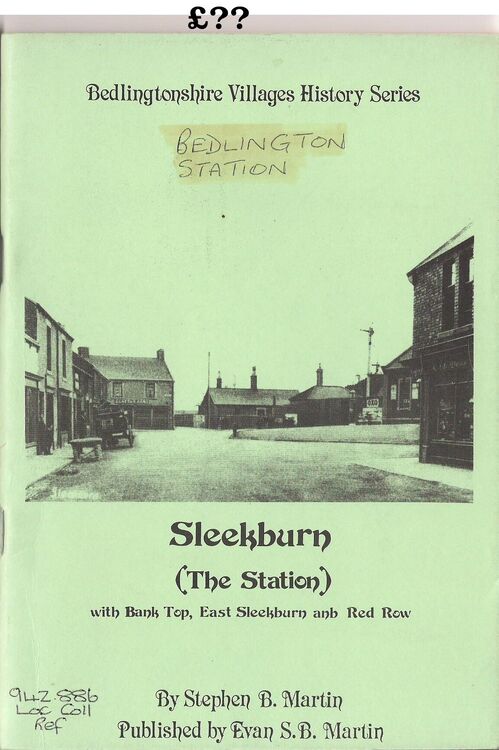
-
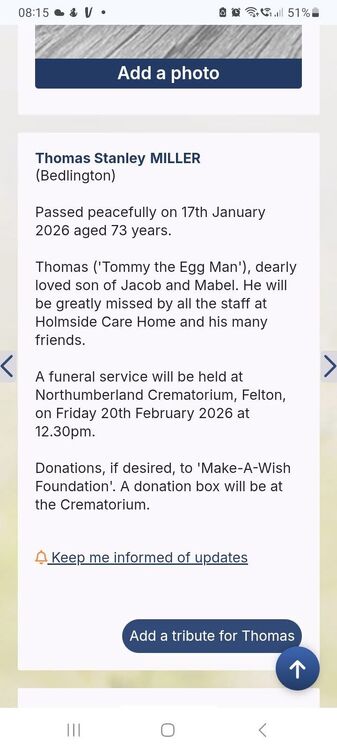
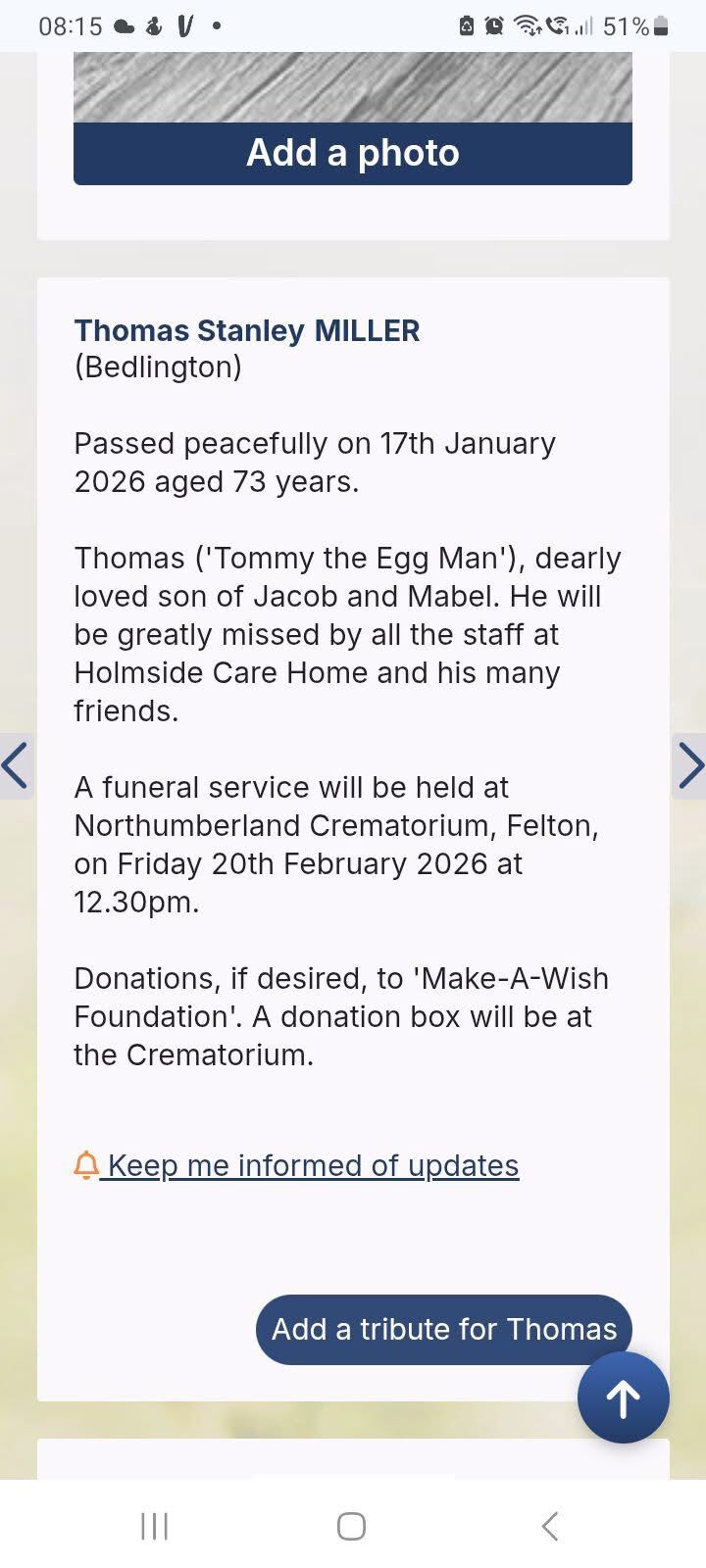
I have just seen the sad news that Tommy The egg man has passed away. https://funeral-notices.co.uk/evening chronicle newcastle/death-notices/notice/miller/5288277?photo=start
-
Hi Folks..I think I can safely say I am of honest,decent,and very sociable nature.Facebook doesn't think so..they have disabled my account because of comments I made using "Sexual Exploitation" ?????!!!...ME...at nearly 82 yrs old?!..I cannot remember what that means now!Haha!..No.I put an honest comment on describing what I think Four Black Immigrants who took turns gang raping a 14 yr old girl should have as punishment for this hienious crime...that's why I was banned.Seems it was ok to report on it and get people angry..but not ok to react. I read where there are 25 million people banned mostly random and for no reason whatsoever.Anybody else had the same problem?Cheers!HPW.
-
The 'Market Place' Post Office journey.
Canny lass replied to Alan Edgar (Eggy1948)'s topic in History Hollow
That is interesting! I would love to see it confirmed somewhere. Does Martin give any reference to the source of that information? Perhaps the booklet contains a list of references to literature, maps etc. used by him when compiling the booklet. If so, could you post a copy here please. -
The 'Market Place' Post Office journey.
Alan Edgar (Eggy1948) replied to Alan Edgar (Eggy1948)'s topic in History Hollow
Cheers @James - I hadn't remembered that one -
The 'Market Place' Post Office journey.
James replied to Alan Edgar (Eggy1948)'s topic in History Hollow
According to Stephen Martin's booklet about Bedlington, the first Post Office was in the Baptist Yard.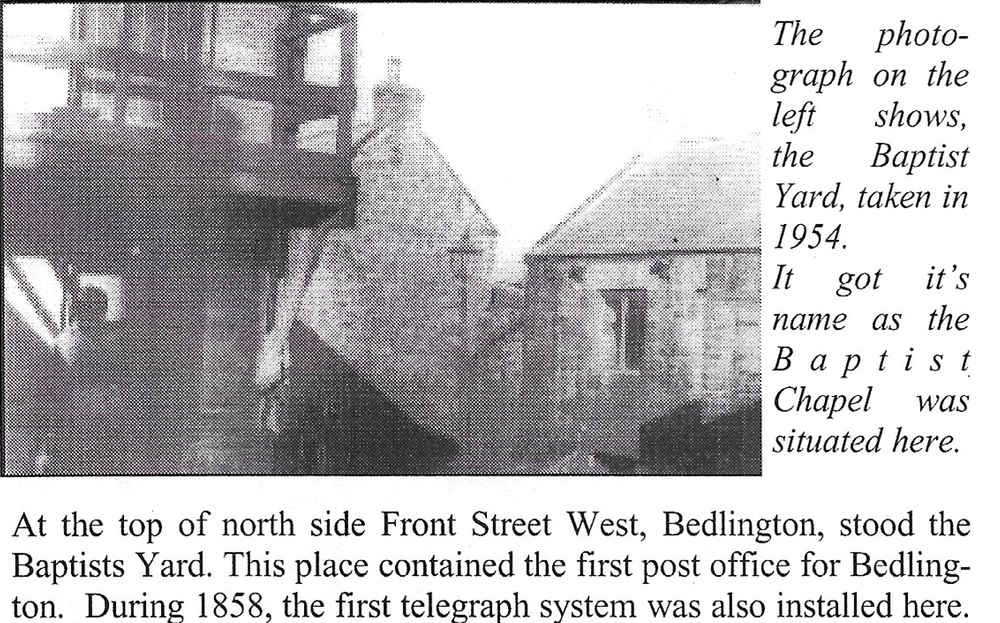


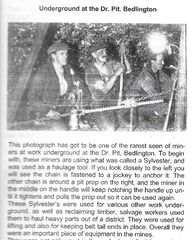
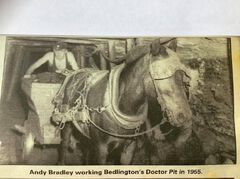
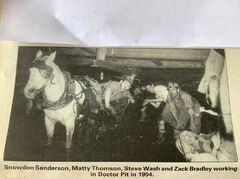
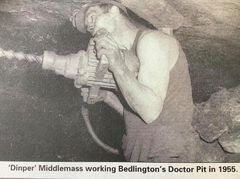




-
Available Subscriptions
-
Latest News
-
A bakery that's already been a big hit elsewhere bin the North East will open a brand new shop this weekend
-
-
Upcoming Events
-
Current Discussions
-
-
Popular Contributors
-
1
-
2
-
3
-
4

-