

Skip to content
View in the app

A better way to browse. Learn more.

Bedlington.uk

A full-screen app on your home screen with push notifications, badges and more.

To install this app on iOS and iPadOS
  1. Tap the Share icon in Safari
  2. Scroll the menu and tap Add to Home Screen.
  3. Tap Add in the top-right corner.
To install this app on Android
  1. Tap the 3-dot menu (⋮) in the top-right corner of the browser.
  2. Tap Add to Home screen or Install app.
  3. Confirm by tapping Install.

Alan Edgar (Eggy1948)

  • Joined

  • Last visited

Everything posted by Alan Edgar (Eggy1948)

  1. Jp Brewis of John,s Car Parts (was the Bed. Station Post Office) posted this aerial photo of his shop & the YMCA grounds with the date of c1973.
  2. Still open - 5 of us went today - all enjoyed all the home cooked food - even Mrs Eats (a non meat eater) commented on how fresh the veg was. Only place I have ever been asked - Do you want chips or veg with your bangers & mash? And if you got kids just out the pub door and across the bridge used to be an excellent place for conkers. If I had of been fit I would have gone that 50 yards to the river wansbeck and collected some conkers for Canny Lass.
  3. Monday 12th October 2015 - the 50th World Conker Championships were held in Southwick, Northhamptonshire, a village in Northamptonshire, where spectators watch competitors from 10 countries do battle with a nut and a 12in piece of string http://www.theguardian.com/technology/gallery/2015/oct/12/50th-world-conker-championships-ashton-conker-club-southwick-in-pictures
  4. We would steep in vinegar, for as long as the smell could be tolerated. Even those in the weshoose weren't allowed to stink it oot too long. If no vinegar available, one had had ones chips, then it was the airing cupboard. We always worked on the theory that you shouldn't let them dry out too much as the inners would shrink and the outer shell would therefore have no support and crack easily when whacked by the opposing conker. In the 60's one of the hobbies was model making with plaster of paris and often heard of kids boring a 1/4" hole in the top of the conker; scooping out the innards; make a small hole for the string/shoe lace/leather strip.... in the bottom of the conker; feed the string through and knot the end of the string on the bottom and then filling with plaster of paris. Rub brown shoe polish onto the exposed plaster of paris to camouflage it. Our rules were - toss a coin to see who went first to belt the opponents conker - whoever lost had to hold his arm out straight, conker dangling from it's string from his hand - each player carried on swinging until he missed the dangling conker and then they switched roles. If any one of the conkers, dangler or basher, came off it's string then the other was deemed the winner and the winning conker was awarded a point to be added to the number it had already smashed. So after win number one your conker was a 'oneser', then twoser et.seq. There were always arguments over conkers that had not smashed to bits but were just come off their string. Was it classed as a defeat or were they allowed to re-string the conker and continue the fight = local rules apply. Another debate would be over how many wins were attributed to a winning conker. If a sixer beat a fiveser then did it become a sevener or were the two totalls added and the winner became a twelveser = local rules again apply. Just for fun I Google the subject and the method of hardening from a 212evser was :- THE ONLY way to actually harden conkers, despite what many people say, is to store them in a cool, dry place for at least one year. It is best to store about twenty or more in a shoebox in a garage. Many of the conkers will go mouldy and the insides will become full of a green dusty substance, but one should survive. In play it is normal that the shell will break off - this is because the inside will have dried out and shrunk. Do not worry if this happens, as it is the inside that is the strongest. It is also helpful to have a good quality string. This should be an old shoelace, preferably a round one, with a small amount of give to absorb the shock. With your now invincible conker you will be able to defeat the unbeatables: the "oven-baked", the "vinager-soaked" and any other strange methods that your friends may come up with. Be prepared to destroy everyone else's conkers! N.B. It may be advisable to make holes in your conkers before storing them, as it will be extremely difficult to drill through your Super-Conker. Sam Davies, nr Bury St Edmunds, Suffolk
  5. Two more Netherton, and 1 Nedderton, for Canny Lass, said to be early 1950s - Netherton Colliery School Netherton Colliery School2 Nedderton village school Photos posted on Bygone Bedlington by Andrea Warner.
  6. Threegee - can these 2 photos of the old Naval Club be added to the album 'Netherton/Nedderton old photos' created by Carole?
  7. I can only confirm your memories. I remember the building. Never went, we just used to pass it coming through that cut from Steadlane past the Ambulance station, on the left. My memory has the 'Youth Club' building on the right hand side just before you came out of the cut onto Millbank.
  8. I did not work out from the partial photo where this photo was taken - onky ever knew a Traveller's Rest pub at Scotland Gate but now I know there used to be one at the Top End :-
  9. Don't recognize the name or any features in the photo Foxy. The sign on the building to the left says Traveller's Rest and the only Traveller's rest pub I know of, or in Reedy's dads list is the one at Scotland Gate.
  10. Millbank - the identification of Millbank House, by Ovalteeny, was the first I had heard of it. Remember Millbank Road & Millbank Place, still there of course, what we used to pass to get to me granny's in Beatty Road but got no history on Millbank House.
  11. Not me Maggie - see previous posts by Ovalteeny & Bayardm.
  12. Thank you all - to keep it simple 1) the photo was taken from the west of the Bedlington Bank, between Atlee Park and Millfield - 2) Bedlington bank & Furnace bank are not in the photo and 3) the building on the skyline of the photo is Millbank House(just East of Beatty Road).
  13. Cheers Ovalteeny & Bayardm - my eyes were focused on the Bedlington Bank, Millfield, Mill Farm & Bank Cottage. So focused I had forgot about the Millbank estate! Ovalteeny - I'll update the Cambois lot.
  14. Bayardm - I am now thinking that if this is Bedlington, and The Bedlington Bank in the top right, then the photo would have to be taken from somewhere down Church lane, on the way to Humford. Had another look at the river Blyth, via Google maps and there is another turn in the river that could fit in with the photo. That would also put your theory of the house at the top as part of the Bedlington Mill buildings. However when you look at the OS maps in the communities.northumberland.gov.uk site they all show a Bank Cottage, on the right side of the bank as you would drive up it, and I can't make out a building, on the right, in the original photo. My current thoughts using the images available are:-
  15. I dropped Aguero from my Fantasy Premier League team as they had him down as only 70% likely to play! Thought they would rest him as no matter what team they turned out we would get thumped. Dropped over 400,000 places after this weeks results!
  16. This postcard has just been sold on ebay :- River Blyth, Bedlington, real photo postcard, posted 1924 See original listing "Some edge wear but generally good condition†Winning Bid £0.99[ 1 bid ] £0.75 Standard Delivery Initial thought was the photo was taken from west side of the Bedlington bank from the outskirts of what is know the Millfield estate. Being an Oval lad that very rarely ventured through the woods along the river bank up to Atlee Park I can't recall any twist and turns in the river, down our end, until just before the Bedlington Bank bridge. So although it would appear it's looking East from the Millfield area the road in the top, approx middle, of the photo would therefore be the Furnace Bank - Bank Top. However the buildings in the photo at the top of the bank don't fit in (in my mind) with other photos of Puddlers row- River View - Bank Top Hotel etc. I remember there was a cottage/house that was in the woods as you walked along the path from the Free side bandstand area up to Beatty Road but the one in this photo, again to me, doesn't fit. It could just be the perspective of the photo and there is nothing showing at the top of the bank and the buildings are closer to what are now Know Road-Dene View West & East. Anyone any thoughts on this photo and could positively identify something that would prove it was Bedlingto Free & Hapenny woods from Atlee Park - Millfield area?
  17. Déjà vu, is the NUFC & SAFC phenomenon of having the strong sensation that an event or experience currently being experienced, has already been experienced in the past, whether it has actually happened or not. Déjà vu is caused by erroneous familiarity and déjà vécu (the feeling of having "already lived through" something) by erroneous recollection. Scientific approaches reject the explanation of déjà vu as NUFC or SAFC prophecy, but rather explain it as an anomaly of memory, which creates a distinct impression that an experience is "being recalled".This explanation is supported by the fact that the sense of "recollection" at the time is strong in most cases, but that the circumstances of the "previous" experience (when, where, and how the earlier experience occurred) are certain and believed to be possible. Two types of déjà vu are suggested to exist: the pathological type of déjà vu usually associated with pure ignorance and the non-pathological which is a characteristic of healthy people and psychological phenomenon knowing they have been there before. A 2004 survey concluded that approximately two-thirds of the NE population have had déjà vu experiences. Other studies confirm that déjà vu is a common experience in healthy individuals, with between 31% and 96% of individuals reporting it. Déjà vu experiences that are unusually prolonged or frequent, or in association with other symptoms such as hallucinations, may be an indicator of neurological or psychiatric illness OR just part of growing up in the North East.
  18. Tell them - let's share and profit from a natural resource before the world thinks Blyth & tall ships is all we have. Voted and link posted on Sixtownships History Group site.
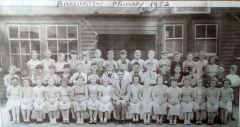
  19. Class 6 - 1955 - just 3 names Class 3 or 4 - 1954 - many names
  20. Class 1 - photo taken at end of school year 1955 - no names
  21. Maggie - is this still the Nicholson Nairn architects computer generated image of the proposed new flats you are talking about, or are there new plans? Info in another posting was:- As the Appeal Decisions document has a Decision date 8th January 2010 and this expires after 5 years does this mean that Nicholson Nairn Architects will be initiating the construction of the new apartments before the end of 2014? As the appeal decision has now expired do we know of another appeal or decision? Bayardm - old images + a copy of the proposed development Nicholson Nairn still have on their web site :-
  22. Cympil - an ex Netherton Village lad, James Lee Aynsley, has given me use of, and to share, his two photos of the old Naval club, no date when they were taken. As you have an album - Bedlington & Netherton thought you might want to add these two in. Anybody have contact with the member named 'Carole' that has a 'Netherton/Nedderton old photos' album? The system shows her last active on the site August 2011 as I thnk these two photos should also be in her album.
  23. Canny lass - Animal bones were collected and sold on - extract from Wikipedia :- In the UK, 19th-century rag-and-bone men scavenged unwanted rags, bones, metal and other waste, from the towns and cities where they lived. Henry Mayhew's 1851 report, London Labour and the London Poor, estimates that in London, between 800 and 1,000 "bone-grubbers and rag-gatherers" lived in lodging houses, garrets and "ill-furnished rooms in the lowest neighbourhoods." The bone-picker and rag-gatherer may be known at once by the greasy bag which he carries on his back. Usually he has a stick in his hand, and this is armed with a spike or hook, for the purpose of more easily turning over the heaps of ashes or dirt that are thrown out of the houses, and discovering whether they contain anything that is saleable at the rag-and-bottle or marine-store shop. These bone-grubbers, as they were sometimes known, would typically spend nine or ten hours searching the streets of London for anything of value, before returning to their lodgings to sort whatever they had found.[4] In rural areas where no rag merchants were present, rag-and-bone men often dealt directly with rag paper makers,[5] but in London they sold rag to the local trader. White rag could fetch 2–3 pence per pound, depending on condition (all rag had to be dry before it could be sold). Coloured rag was worth about two pence per pound. Bones, worth about the same,[4] could be used as knife handles, toys and ornaments, and when treated, for chemistry. The grease extracted from them was also useful for soap-making. Metal was more valuable; an 1836 edition of Chambers's Edinburgh Journal describes how "street-grubber" could be seen scraping away the dirt between the paving stones of non-macadamised roads, searching for horseshoe nails.[6] Brass, copper and pewter was valued at about 4–5 pence per pound. In a typical day, a rag-and-bone man might expect to earn about six pence.[4]
  24. Whilst trawling the sixtownships history group site the Big Geordie debate came up again starting, again, with the photo (that Maggie posted on this site) of Broadway House Farm- c1960 - and the comment 'Big Geordie at Bedlington'. Photo posted on the 21st and 73 comments of fiction; hand me down stories, hazy memories and some facts and technical info posted by the 22nd. Naturally this was followed by many comments like - "me dad worked that" ; "I remember that crossing the road" !!!!!! & " was never at Bedlington......". What I consider to be the most conclusive that it never worked Bedlington, or the the base was never built at Bedlington from all the comments and photos posted are :- Paul Thoburn Big Geordie or Bucyrus Erie 1550 W, was built at the Radar O.C.C.S Widdrington in the late 60's. Paul Thoburn The machine in the photo was one of two Bucyrus Erie 1150B draglines brought over from America, to work the Acorn Bank Site in the 1950's. For more pictures go to Durham Mining Museum Website and follow the links. Davey McCraith Big Geordie never worked acorn bank he wasn't built till 1969. Janis Lowery hubby says they were called marion or 1150 at bedlington. The Bucyrus Erie 1550-W walking dragline excavator was dubbed Big Geordie at Radar Opencast site in Widdrington, near Morpeth, where it worked from 1968 until Butterwell Opencast Site nearby was opened a few years later and eventually moved to Stobswood Opencast, where it ended its working days in 1993.

Account

Navigation

Search

Search

Configure browser push notifications

Chrome (Android)
  1. Tap the lock icon next to the address bar.
  2. Tap Permissions → Notifications.
  3. Adjust your preference.
Chrome (Desktop)
  1. Click the padlock icon in the address bar.
  2. Select Site settings.
  3. Find Notifications and adjust your preference.